Supply chain sector breaks new ground with founding of Africa-wide body
Newly formed African Supply Chain Confederation aims to unify and elevate supply chain standards and networks across the continent.
SOCIAL MEDIA
By our African Marketing Confederation News Team | 2025
New legislation in Zambia is helping to establish a supportive environment for creators. But there’s more to be done.
In November 2024, Zambia’s Parliament passed a motion to facilitate social media monetisation, a commendable step toward empowering content creators and boosting the country’s digital economy.
Antoni Shkraba from Pexels
However, while this is progress, it’s important to address the realities of what truly drives creator earnings, and the role government can play in enabling a thriving creator economy.
The assumption that government negotiation with platforms like Facebook and TikTok will automatically result in monetisation for Zambian creators is misguided. These platforms don’t require governments to engage with them to enable monetisation. Instead, monetisation is based on a combination of factors such as:
Platform Policies. Platforms like YouTube, TikTok and Facebook decide which countries they enable monetisation for, based on their internal criteria such as advertising demand and payment infrastructure.
Audience Demographics. Earnings depend heavily on where a creator’s audience is located. Advertisers pay more for views from countries with higher purchasing power – for example, the US, UK or South Africa.
For Zambian creators, even if platforms enable monetisation, the local advertising market may limit their earnings because Zambia’s economy doesn’t yet generate high-value ad spend. This means that only creators with large, international audiences stand to benefit significantly from platform ads.
While regulation is helpful in creating a supportive environment for creators, the government’s role isn’t to negotiate directly with platforms. Instead, it should focus on building an ecosystem that enables creators to monetise effectively.
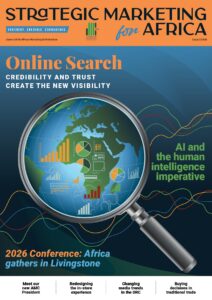
You can read more about more about Zambia’s Social Media Monetisation legislation and the potential way forward for the country’s creator community in the latest Strategic Marketing for Africa – the voice of African marketing and the official publication of the African Marketing Confederation (AMC).
Read or download Issue 1 2025 online here. A Print Edition is also available.

Newly formed African Supply Chain Confederation aims to unify and elevate supply chain standards and networks across the continent.

App was relaunched in April 2025 after three years of development and is claimed to have boosted on-demand grocery retail turnover by 40%.

Le Club Marketing Avis+ joins the African Marketing Confederation as its first Associate Member, strengthening pan-regional collaboration and marketing leadership across Africa.

The recent G.O.A.T. Marketers’ Fireplace event organised by the Uganda Marketers Society did more than just celebrate excellence.

Confederation has fast-paced online Express Courses you can complete in a week, to in-depth studies taking up to 10 months.

Study finds that firms cannot credibly signal their product quality simply through different social media marketing spending levels.

Tiger Brands retains its iconic roaring tiger emblem, but with a more modern geometric representation and an updated font.

La Confédération se réjouit de la représentation accrue des pays francophones, alors qu’elle s’efforce de devenir une organisation véritablement panafricaine.

Confederation thrilled to have greater representation from Francophone countries as it strives to be a truly Africa-wide organisation.

Six-country study finds that younger, more optimistic, consumers will drive a retail revolution across the continent.

Choice Hotels International is opening three Kenyan properties in early 2026 and plans at least 15 more in sub-Saharan Africa.
Dr. Kin Kariisa is an extraordinary force at the helm of Next Media Services, a conglomerate encompassing NBS TV, Nile Post, Sanyuka TV, Next Radio, Salam TV, Next Communication, Next Productions, and an array of other influential enterprises. His dynamic role as Chief Executive Officer exemplifies his unwavering commitment to shaping media, business, and community landscapes.
With an esteemed academic journey, Dr. Kariisa’s accolades include an Honorary PhD in exemplary community service from the United Graduate College inTexas, an MBA from United States International University in Nairobi, Kenya, a Master’s degree in Computer Engineering from Huazong University in China, and a Bachelor’s degree in Statistics from Makerere University.
Dr. Kariisa pursued PhD research in Computer Security and Identity Management at Security of Systems Group, Radboud University in Nijmegen, Netherlands. As a dynamic educator, he has shared his expertise as a lecturer of e-Government and Information Security at both Makerere University and Radboud University.
Dr Kin did his PhD research in Computer Security and Identity Management at Security of Systems Group, Radbond University in Nigmegen, Netherlands. He previously served as a lecturer of e-Government and Information Security at Makerere University in Kampala, Uganda and Radbond University in Netherlands.
Dr Kin did his postgraduate courses in Strategic Business Management, Strategic Leadership Communication and Strategies for Leading Successful Change Initiatives at Harvard University, Boston USA.