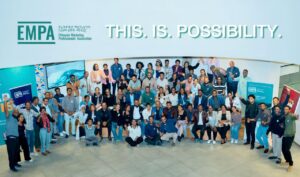
Landmark gathering gets underway with delegates from over 30 countries
Opening plenary hears that securing Africa’s economic future requires businesses to discover new customers and cross-border opportunities.
BUSINESS STRATEGY
By our African Marketing Confederation News Team | 2024
McDonald’s sees biggest business deterioration in four years – more than twice the size of what market analysts had forecast.
Starbucks is not the only quick-service restaurant chain facing ongoing economic headwinds. McDonald’s has just announced another bigger-than-expected drop in sales as demand continues to slow in its key global markets.
Sales at its outlets declined by 1.5% between July and September, the biggest deterioration in four years and more than twice the size of what market analysts had forecast.
It follows a 1% drop in the April to June period – the first two consecutive quarters of contraction since Covid lockdowns in 2020.
“Spending by consumers has been sluggish or falling across the US, Europe and China in recent months, with people weary from years of high food inflation looking for cheaper meal fixes or staying at home,” the London-based The Guardian newspaper reports.
Photo by El Sultan from Pexels
McDonald’s has tried to entice customers with lower-price meals and special promotions in some markets – but so have its competitors.
“Rivals including Wendy’s, Burger King and Taco Bell have also resorted to meal bundles and limited-time offers to get customers through the door, especially those from lower-income households,” The Guardian states.
Chris Kempczinski, the McDonald’s CEO, has emphasised the company is “laser-focused” on everyday value and affordability as customers remain “mindful about their spending”.
Starbucks reviews pricing and menu
Last week, global coffee chain Starbucks said it is aiming to boost its stagnating business by, among other things, simplifying what it believes has become an overly complex menu and reviewing its pricing strategy.
The impending changes, which are part of a wider overhaul of the business, were announced by new CEO, Brian Niccol.
Starbucks has been struggling for some time and Niccol recently took over from former chief executive, Laxman Narasimhan, who lasted only 18 months in the role before being ousted.
Starbucks’ global sales reduced by 7% in the three months to the end of September, while profits will be 25% lower than in the same period a year earlier.

Opening plenary hears that securing Africa’s economic future requires businesses to discover new customers and cross-border opportunities.

Participants challenged to identify, articulate and commercialise the cultural assets that make their brand ready for a global audience.

Second outlet planned for Nairobi before year end, with Nigeria, South Africa and Morocco said to be future target markets.

Online search behaviour has changed significantly with the rise of AI. How can African brands adapt to this new marketing landscape?

Researchers propose a framework for packaging that senses, learns and acts – making packaging an active, AI-powered tool against food waste.

Country needs marketers to build recognition and consumer trust around Malawian products and national brand, says Deputy Minister.

Fashion brand suspends giant lingerie high above the city’s streets, using shadows to create a moving billboard for pedestrians and motorists.

Researchers describe AI influencers as having a ‘dual identity’. Consumers evaluate both ‘person’ and ‘technology’ identities at once.

Reputation and trust, once modest influences on hotel choice, have become some of the strongest predictors of patronage, study finds.

South African brands are increasingly setting the global benchmark for customer loyalty strategies, organisers say.

Global influences among younger consumers are still present, but they are being filtered through a distinctly Zambian lens.