
Researchers explain why 10-second micro ads outperform longer spots
Short ads shown on TV increased website visits within five minutes of airing by 10-40% compared with longer advertisements.
MEDIA RESEARCH
By the African Marketing Confederation News Team | 2024
Delegates hear of an unfolding new era in the continent’s media research, where in-moment studies will be crucial.
The Pan African Media Research Organisation (Pamro) annual conference is an opportunity for Africa’s media owners, marketers, brand managers and advertising executives to share current research methodologies, as well as best practice, challenges, successes and failures.
‘Resilience & Innovation: Navigating the Media Landscape in Africa’ was the theme of the 2023 annual conference, which this year took place in Casablanca.
Photo Credit: DStv Media Sales.
As always, the conference attracted a mix of African and international speakers, with the sessions including panel discussions and presentation of papers. There were also opportunities for informal interactions and for delegates to experience the sights, sounds and hospitality of Morocco.
The winning paper this year was presented by Matt Angus-Hammond, Regional Director for West Africa at GeoPoll.
His paper – the ‘Democratic Republic of Congo Media Landscape Survey 2023: Context, Execution and Insights’ – shared the story of why and how GeoPoll conducted the largest media audience survey in the Democratic Republic of Congo’s history, and what insights it revealed about this important, but poorly understood, market.
The second-placed paper was presented by Mehdi Aman, Technology & Analytics Director, and Siham Malek, MD at Integrate, a Kantar affiliate, for their paper titled ‘Overcoming Memory Bias: A Non-Invasive Methodology for Tracking Digital Behaviour in Morocco’.
Digital landscape continues to evolve
According to the pair, as the digital landscape continues to evolve, capturing in-moment digital behaviour of consumers becomes increasingly vital. Traditional survey methods often depend on respondents’ memory, resulting in recall biases that can distort the data.
The paper was based on research that introduces a non-invasive, agile, respondent-friendly and automated data collection approach designed to track real-time digital behaviour and counteract memory bias. By using self-reported data, it avoids the necessity of intrusive tracking apps on the respondent’s device, enhancing user privacy.
Operating under tight timelines and utilising an offline approach, Integrate employed a mobile panel representative of Morocco’s digital population for the study. The innovative methodology, combining segmentation and diary methodologies with Integrate’s data collection tool, Nfield, and automated data quality checks, facilitated rapid fieldwork, operational responsiveness and emphasised data quality.
Conference delegates heard that within one week, the company had collected 2,985 data points, leading to the first digital segmentation in Morocco and attracting significant media attention. In-moment studies such as these hold immense potential for understanding usage, attitudes and media consumption habits, signalling a new era in the study of digital behaviour.
To find out more about the current state of media planning in Africa, read the latest issue (Issue 4 2023) of ‘Strategic Marketing for Africa’. You can browse or download a free copy of the magazine here.

Short ads shown on TV increased website visits within five minutes of airing by 10-40% compared with longer advertisements.

Supeco’s rapid expansion shows how the discount model is becoming a bigger part of grocery retail in the North African country.

Consumers reward visible eco-friendly additions such as reusable bottles, but give little credit to businesses that reduce or remove products.

Nestlé believes Ghana will continue to play a leading role in the future of Central and West Africa.
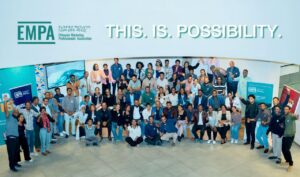
Ethiopia’s marketers gather to celebrate hosting next year’s conference – but with an eye on the hard work ahead.

Tech is creating more ways for audiences to connect, but lasting value will come from understanding the people behind those connections.

The new production line at the historic Maydon Wharf facility in Durban will address growing international demand.

Tanzania, Kenya, Zimbabwe, Ethiopia and South Africa all feature in the African meetings, incentives, conferences and exhibitions awards.
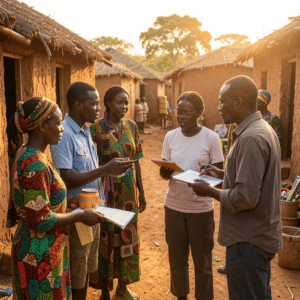
Much of the broader conversation around AI in market research assumes conditions that do not consistently exist across many African markets, writes Soyinka Witness.
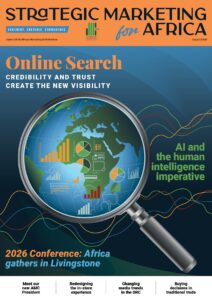
Strategic Marketing for Africa, the publication for deep-thinking African marketing professionals, is not to be missed.

Rwanda’s marketing body is enthusiastic about the F1 announcement, emphasising that ‘investors and visitors follow governance, not slogans’.