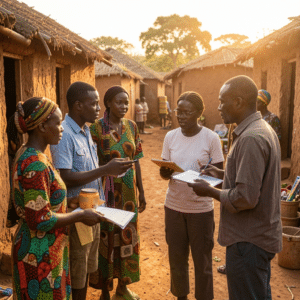
Africa declares a new standard for its communications profession
For too long, the PR landscape has had no shared standard for who practises in it or what responsibility they carry, founders say.
BUSINESS STRATEGY
By our African Marketing Confederation News Team | 2025
Company awaits regulatory approval to sell its Chococam confectionary business to a local investment group after 17 years in the country.
Tiger Brands, the South African-based FMCG group, is continuing with its strategy of exiting what it considers to be non-core operations, and expects to leave Cameroon by early next year.
Image: Tiger Brands
The company has signed a Sale and Purchase Agreement to sell its 74.69% stake in confectionary business, Chococam, to Minkama Capital Ltd, an Africa-focused investment firm partnering with BGFIBank Group S.A.
“We are exploring the best options for valuation and exit in respect of our non-core international operations, including Chococam,” Tiger Brands confirmed in a recent statement.
Chococam sells brands such as such as Mambo and Bonbon Kola. Tiger Brands’ core brands are the likes of Jungle Oats, Koo, Oros, Energade and Albany.
New owners face a complex landscape
“Once the transaction is concluded, Chococam’s new owners are expected to face a complex landscape,” comments Agence Ecofin, an information agency specialising in public management and the African economy.
“The terms and cost of the syndicated debt will be key to ensuring financial stability. At the same time, supply chain challenges – notably in cocoa and sugar – could affect profitability in an inflationary environment. Maintaining brand loyalty and product quality during the transition will also be crucial.”
According to Ecofin, the move reflects Tiger Brands’ shift toward core South African operations and higher-margin categories.
The company exited Chile in early 2025. It left Nigeria in 2021 by selling its 49% stake in UAC Foods back to its parent company, UAC of Nigeria. The food manufacturer cited factors such as regulatory and currency risks, as well as a strategic decision to focus on its core South African operations.

For too long, the PR landscape has had no shared standard for who practises in it or what responsibility they carry, founders say.

By carefully selecting followers to engage with an influencer’s post, marketers can significantly increase the post’s spread.

SA’s Advertising Regulatory Board finds Kia advertisement could be offensive to people with certain health disorders.

Global study finds AI is helping marketers produce more – but is not creating the time and creative space they expected.

Urban Africa will double its footprint, adding the equivalent of more than 4,000 Manhattans or almost 400 Singapores, The Economist reports.

Luc Demez brings experience from Europe and African countries as the Carrefour brand looks to expand into Nigeria with a local partner.

What makes brands successful in Africa? A summary of the award-winning paper presented at Esomar’s first conference in Africa.

Woolworths supermarket chain embraces an AI-powered chef as it leverages two decades of recipes to answer an age-old family question.

Consumers are prioritising their wellness despite tighter wallets, meaning sportswear remains one of the most resilient areas of fashion.

Nominations for the 2026 African Marketing Confederation and African Supply Chain Confederation awards close on 31 July.

Consumers may stick with troubled brands because their emotional attachment overrides the perceived risk, study finds.