Africa declares a new standard for its communications profession
For too long, the PR landscape has had no shared standard for who practises in it or what responsibility they carry, founders say.
BUSINESS STRATEGY
By our African Marketing Confederation News Team | 2024
Company announces 7,500 job cuts and plans to spin-off its underperforming ice-cream division into a separate business operation.
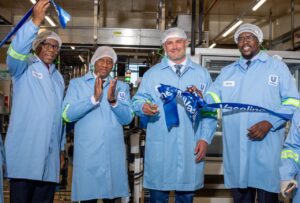
Unilever, the global FMCG giant, has announced that it is to cut 7,500 jobs around the world, as well as spin off its ice–cream division into a new business.
Photo credit: Unilever
The overhaul is part of a new business strategy aimed at saving the company approximately US$870-million over the next three years.
UK-based Unilever is the custodian of some of the world’s best-known brands – among them Dove soap, Hellmann’s mayonnaise, Vaseline and Sunlight. Worldwide, it employs around 128,000 people.
The company has come under pressure in recent years to streamline its sprawling business, which is managed mostly from London. The food business, though, operates from Rotterdam in the Netherlands.
Unilever’s ice-cream division is headquartered in Rotterdam and comprises some of the world’s top-selling ice-cream brands. These include Magnum, Ben & Jerry’s, Wall’s and Cornetto.
Ice cream is 16 percent of group sales
Ice cream accounts for 16% of group sales and has an annual turnover of around $8.6-billion. The spin-off from Unilever is expected to be completed by 2025.
The spin-off of the business, also called a de-merger, is the separation of a large company into two or more smaller organisations.
According to Hein Schumacher, who was appointed as Chief Executive of Unilever in January 2023, ice-cream is different from the rest of the business because of its frozen supply chain, high seasonality, and high capital requirements.
“The separation of ice-cream and the delivery of the productivity programme will help create a simpler, more focused and higher-performing Unilever. It will also create a world-leading ice-cream business, with strong growth prospects and an exciting future as a standalone business,” said Ian Meakins, Chair and Non-Executive Director of Unilever.
Matt Britzman, an equity analyst, told the London-based The Guardian newspaper: “Ice-cream always looked like the odd one out when you compare it to other product lines, and performance has struggled of late.”

For too long, the PR landscape has had no shared standard for who practises in it or what responsibility they carry, founders say.

By carefully selecting followers to engage with an influencer’s post, marketers can significantly increase the post’s spread.

SA’s Advertising Regulatory Board finds Kia advertisement could be offensive to people with certain health disorders.

Global study finds AI is helping marketers produce more – but is not creating the time and creative space they expected.

Urban Africa will double its footprint, adding the equivalent of more than 4,000 Manhattans or almost 400 Singapores, The Economist reports.

Luc Demez brings experience from Europe and African countries as the Carrefour brand looks to expand into Nigeria with a local partner.

What makes brands successful in Africa? A summary of the award-winning paper presented at Esomar’s first conference in Africa.

Woolworths supermarket chain embraces an AI-powered chef as it leverages two decades of recipes to answer an age-old family question.

Consumers are prioritising their wellness despite tighter wallets, meaning sportswear remains one of the most resilient areas of fashion.

Nominations for the 2026 African Marketing Confederation and African Supply Chain Confederation awards close on 31 July.

Consumers may stick with troubled brands because their emotional attachment overrides the perceived risk, study finds.