How AI is going to shape 2026’s hottest new marketing trends
This year taught the industry that tech like Generative AI can help marketers make smarter decisions. In 2026, the love affair continues.
ARTIFICIAL INTELLIGENCE
By our African Marketing Confederation News Team | 2025
Excitement about AI’s potential now exceeds concerns (57% vs. 43%), according to study conducted in 21 countries.
This past year, artificial intelligence entered the mainstream, showing people around the world how it can serve as an engine for transformation across many fields. How are people’s opinions changing as they experience and use AI in their work and everyday lives?
Photo: Tara Winstead from Pexels
A new global survey from Ipsos and Google, titled ‘Our Life with AI: From innovation to application’, claims that attitudes towards AI are more positive as its use grows.
The survey of 21,000 people across 21 countries says global artificial intelligence usage has jumped 10 percentage points to 48%, and excitement about AI’s potential now exceeds concerns (57% vs. 43%).
While concerns persist (29% of respondents believe that AI will change the economy in a negative way, down from 33% last year), Kent Walker, President of Global Affairs at Google & Alphabet, says people are beginning to experience the practical benefits of AI – from streamlining everyday tasks like email drafting to enhanced flood-forecasting systems.
“This increased exposure to AI’s capabilities – plus optimism about its potential to drive future breakthroughs in science, medicine, and other fields – has led to a greater understanding and appreciation of its potential,” Walker comments in a press release.
Opportunity for scientific and medical breakthroughs
Respondents are most enthusiastic about AI’s potential to drive progress in healthcare and scientific research: seven in 10 expect it to have a positive impact on science (72%) and medicine / health care (71%).
“Personally and professionally, many people believe that AI will benefit them and are interested in exploring AI applications that can help them communicate, problem solve and execute better,” says Walker.
“For example, 65% of global respondents are excited about using AI for personal assistance – like shopping online, organising schedules or planning trips.”
Usage of artificial intelligence for work purposes
Professionally, many people see AI as a tool to not only help them be more productive, but also operate at a higher, more strategic level.
Almost three quarters (74%) of AI users are already using it for work. More broadly, the public prioritises using AI to help people use complex data or systems (84% of respondents believe it is significant) and promote business problem solving (82% of respondents) as the most important AI workforce applications.
You can read the full report here.

This year taught the industry that tech like Generative AI can help marketers make smarter decisions. In 2026, the love affair continues.

First outlet is located at a popular shopping mall close to Johannesburg. Launch strategy emphasises low pricing.

Company awaits regulatory approval to sell its Chococam confectionary business to a local investment group after 17 years in the country.

We apply an African lens to the recent World Out of Home Organization Congress held in Mexico City.

The nation is currently one of the lesser lights in African coffee exports, but the 2024/25 marketing season showed positive trends.

Globetrack honoured in London at the International Association for the Measurement and Evaluation of Communication (AMEC) awards.

Market researchers believe it’s not simply bargain hunting. It is a recalibration by consumers of what constitutes value.

Confederation has fast-paced online Express Courses you can complete in a week, to in-depth studies taking up to 10 months.

‘Top Global Consumer Trends’ report for 2026 identifies four trends that highlight crucial shifts in consumer behaviour.

The forum is a premier event that brings together marketing professionals, thought leaders and innovators from across the globe.

If you want to win on the continent as a marketer, don’t just scale. Localise, adapt your strategies and stay close to the consumer.
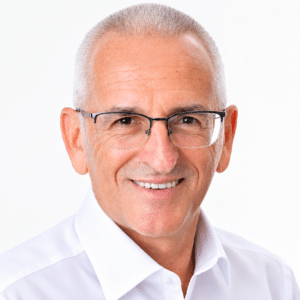
Dr. Kin Kariisa is an extraordinary force at the helm of Next Media Services, a conglomerate encompassing NBS TV, Nile Post, Sanyuka TV, Next Radio, Salam TV, Next Communication, Next Productions, and an array of other influential enterprises. His dynamic role as Chief Executive Officer exemplifies his unwavering commitment to shaping media, business, and community landscapes.
With an esteemed academic journey, Dr. Kariisa’s accolades include an Honorary PhD in exemplary community service from the United Graduate College inTexas, an MBA from United States International University in Nairobi, Kenya, a Master’s degree in Computer Engineering from Huazong University in China, and a Bachelor’s degree in Statistics from Makerere University.
Dr. Kariisa pursued PhD research in Computer Security and Identity Management at Security of Systems Group, Radboud University in Nijmegen, Netherlands. As a dynamic educator, he has shared his expertise as a lecturer of e-Government and Information Security at both Makerere University and Radboud University.
Dr Kin did his PhD research in Computer Security and Identity Management at Security of Systems Group, Radbond University in Nigmegen, Netherlands. He previously served as a lecturer of e-Government and Information Security at Makerere University in Kampala, Uganda and Radbond University in Netherlands.
Dr Kin did his postgraduate courses in Strategic Business Management, Strategic Leadership Communication and Strategies for Leading Successful Change Initiatives at Harvard University, Boston USA.