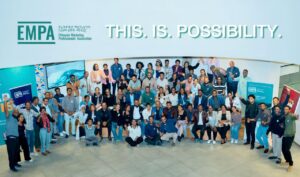
Landmark gathering gets underway with delegates from over 30 countries
Opening plenary hears that securing Africa’s economic future requires businesses to discover new customers and cross-border opportunities.
BUSINESS STRATEGY
By our African Marketing Confederation News Team | 2024
Bralirwa says it is developing the Rwandan beer market for sustainable growth and investing in digital technology and innovation.
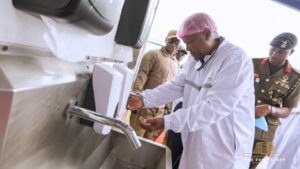
Bralirwa, the subsidiary of the Heineken Company operating in Rwanda, recently opened a new US$32-million production line at its brewery in the Rubavu District in the west of the country.
VIP guests inaugurate the new production line.
Photo: Bralirwa
The beer and soft drinks manufacturer includes beer brands Heineken, Amstel Malt and Primus beers in its brand portfolio, as well as energy drink Cheetah. It also has a licence agreement with Coca-Cola.
Dutch-owned Heineken has a long-standing relationship with Bralirwa and has a 75% stake in the business, with the remaining 25% being listed on the Rwanda Stock Exchange.
According to a statement, the investment in the new production capacity is “in line with the company’s commitment to developing the Rwandan beer market for sustainable growth and proactively investing in digital technology and innovation to improve its operations”.
Speaking at the inauguration of the new facility, Etienne Saada, Managing Director of Bralirwa, said: “For the past 67 years, Bralirwa has continuously invested in innovation and growth with a clear goal to win the hearts of our customers.
Environment conducive to growth and prosperity
“This has been made possible by an environment conducive to growth and prosperity, as well as the commitment and dedication of our key stakeholders and employees.”
In the recent release of its financial results to 31 December 2023, the company acknowledged the importance of adapting to market dynamics and consumer preferences. while maintaining a strong commitment to sustainability and responsible business practices.
According to a report by market insights platform Global Data, Heineken recently agreed a deal to sell its interest in Champion Breweries, its Nigeria-based beer business, to EnjoyCorp, a local business that is building a portfolio of food, beverage and hospitality brands.
“Last year, Heineken was given the green light to take control of South Africa’s Distell Group and Namibia Breweries,” adds Global Data’s report.
“The move solidified Heineken’s position in southern Africa. Distell is a major player in ciders, flavoured alcoholic beverages, wines and spirits across the continent, while Namibia Breweries is the beer market leader in Namibia.”

Opening plenary hears that securing Africa’s economic future requires businesses to discover new customers and cross-border opportunities.

Participants challenged to identify, articulate and commercialise the cultural assets that make their brand ready for a global audience.

Second outlet planned for Nairobi before year end, with Nigeria, South Africa and Morocco said to be future target markets.

Online search behaviour has changed significantly with the rise of AI. How can African brands adapt to this new marketing landscape?

Researchers propose a framework for packaging that senses, learns and acts – making packaging an active, AI-powered tool against food waste.

Country needs marketers to build recognition and consumer trust around Malawian products and national brand, says Deputy Minister.

Fashion brand suspends giant lingerie high above the city’s streets, using shadows to create a moving billboard for pedestrians and motorists.

Researchers describe AI influencers as having a ‘dual identity’. Consumers evaluate both ‘person’ and ‘technology’ identities at once.

Reputation and trust, once modest influences on hotel choice, have become some of the strongest predictors of patronage, study finds.

South African brands are increasingly setting the global benchmark for customer loyalty strategies, organisers say.

Global influences among younger consumers are still present, but they are being filtered through a distinctly Zambian lens.