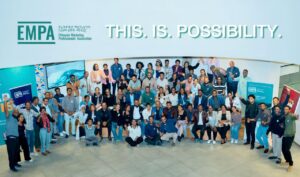
Pre-conference masterclass discusses taking African brands to the world
Participants challenged to identify, articulate and commercialise the cultural assets that make their brand ready for a global audience.
SOCIAL MEDIA
By our News Team | 2023
Blood-letting among social media companies continues, although LinkedIn’s cuts are tiny compared to Twitter and Meta.
LinkedIn has become the latest social media platform to cut jobs, announcing this week that just over 700 positions will go.
This continues the trend of tough economic times being experienced by social media platforms – although LinkedIn’s redundancies are tiny compared to those announced by Twitter and by Meta. The latter owns Facebook, Instagram and WhatsApp.
Photo by Bastian Riccardi from Pexels
A drop in advertising has been cited as a key challenge by both Twitter and Meta. However, LinkedIn’s Chief Executive, Ryan Roslansky, has been less specific and has simply mentioned fluctuating market demand.
“With the market and customer demand fluctuating more, and to serve emerging and growth markets more effectively, we are expanding the use of vendors,” he said. “We are also removing layers, reducing management roles and broadening responsibilities to make decisions more quickly.”
Many of the jobs will go in China
Many of the jobs that will go are in China, where the company is closing down its local InCareer jobs app due to “fierce competition and a challenging macroeconomic climate.” The app only allowed job posts – without comments or articles – and was launched in China when LinkedIn decided to close its traditional platform due to pressure from the Chinese government, which discourages Western social media companies.
Some of the 700-plus job cuts will, however, be offset by around 250 new positions being created in other areas of the business – namely operations, new business and account management.
LinkedIn employs around 20,000 people worldwide and has more than 850-million members spanning a vast array of professions, interests, functions and career paths.
It claims to be the world’s largest online professional network and is inherently B2B-centric. LinkedIn described itself in a January 2023 online post as “nearly ubiquitous as a content marketing channel for B2B marketers”.
According to a study by research company Nielsen, brands are perceived to be “more professional” (92%), “more intelligent” (74%), “higher quality” (59%), and “more respectable” (59%) when their ad is seen on the LinkedIn platform.
LinkedIn is owned by Microsoft.

Participants challenged to identify, articulate and commercialise the cultural assets that make their brand ready for a global audience.

Second outlet planned for Nairobi before year end, with Nigeria, South Africa and Morocco said to be future target markets.

Online search behaviour has changed significantly with the rise of AI. How can African brands adapt to this new marketing landscape?

Researchers propose a framework for packaging that senses, learns and acts – making packaging an active, AI-powered tool against food waste.

Country needs marketers to build recognition and consumer trust around Malawian products and national brand, says Deputy Minister.

Fashion brand suspends giant lingerie high above the city’s streets, using shadows to create a moving billboard for pedestrians and motorists.

Researchers describe AI influencers as having a ‘dual identity’. Consumers evaluate both ‘person’ and ‘technology’ identities at once.

Reputation and trust, once modest influences on hotel choice, have become some of the strongest predictors of patronage, study finds.

South African brands are increasingly setting the global benchmark for customer loyalty strategies, organisers say.

Global influences among younger consumers are still present, but they are being filtered through a distinctly Zambian lens.

Researchers find that lack of perceived ‘genuine care’ is the mechanism connecting AI involvement to lower trust ratings.