Pre-conference masterclass discusses taking African brands to the world
Participants challenged to identify, articulate and commercialise the cultural assets that make their brand ready for a global audience.
SHOPPER EXPERIENCES
By our African Marketing Confederation News Team | 2025
Nearly half of global shoppers often abandon their online shopping cart because the digital experience is too frustrating, study finds.
Global advertising and marketing agency VML has released its ninth annual Future Shopper report, an expansive international study revealing that, despite years of digital acceleration, many brands are still failing to deliver on the basics of customer experience.
Photo: Sora Shimazaki from Pexels
Surveying over 25,000 shoppers across 16 countries, the 2025 edition exposes a gap between what consumers expect and what brands provide when it comes to value, speed and trust. In fact, 45% of global shoppers often abandon their online shopping cart because the digital experience is too frustrating.
According to the report, brands must prioritise human-centric experiences and address consumer frustrations with current digital offerings, especially if they want to grow in an AI-first world.
Although in its infancy in the customer journey, AI’s high usage and trust indicates that it will fundamentally change how consumers shop, from discovery to purchase.
Despite online marketplaces setting the benchmark for customer service, their market share has dropped since last year, and search engines have seen a resurgence during the information and search phases of the journey, possibly fuelled by AI integration.
A shift toward true omnichannel retail
Globally online marketplaces remain the dominant force throughout the shopper journey, with 22% of respondents using the lead marketplace in the region for inspiration, 15% using the secondary marketplace, and 9% using other marketplaces.
When it comes to search, 17% of respondents use the lead marketplace, 12% the secondary and 7% other marketplaces. However, marketplace share of wallet has slipped to 22%, down from 29% last year, signalling a shift toward true omnichannel retail.
“The data is clear: consumers are continuing to raise the bar on what they expect – faster delivery, seamless experiences, and meaningful personalisation powered by technology like AI, whilst at the same time re-evaluating what they purchase and when,” says Jeff Gehab, Global CEO, VML Enterprise Solutions.
“Yet, many businesses are missing the mark on the fundamentals of customer experience. Neither the customer journey of the future, nor the consumer of the future, will be the same as today, but retailers and brands must find a way of offering the best experience right now, while building the experience of the future in parallel.”
Among the notable findings of the 2025 Future Shopper report:
You can find out more about the report here.

Participants challenged to identify, articulate and commercialise the cultural assets that make their brand ready for a global audience.

Second outlet planned for Nairobi before year end, with Nigeria, South Africa and Morocco said to be future target markets.

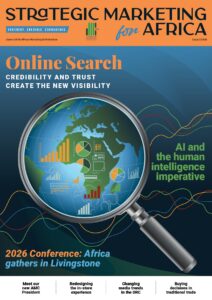
Online search behaviour has changed significantly with the rise of AI. How can African brands adapt to this new marketing landscape?

Researchers propose a framework for packaging that senses, learns and acts – making packaging an active, AI-powered tool against food waste.

Country needs marketers to build recognition and consumer trust around Malawian products and national brand, says Deputy Minister.

Fashion brand suspends giant lingerie high above the city’s streets, using shadows to create a moving billboard for pedestrians and motorists.

Researchers describe AI influencers as having a ‘dual identity’. Consumers evaluate both ‘person’ and ‘technology’ identities at once.

Reputation and trust, once modest influences on hotel choice, have become some of the strongest predictors of patronage, study finds.

South African brands are increasingly setting the global benchmark for customer loyalty strategies, organisers say.

Global influences among younger consumers are still present, but they are being filtered through a distinctly Zambian lens.

Researchers find that lack of perceived ‘genuine care’ is the mechanism connecting AI involvement to lower trust ratings.