Pre-conference masterclass discusses taking African brands to the world
Participants challenged to identify, articulate and commercialise the cultural assets that make their brand ready for a global audience.
A.M.C. CONFERENCE 2025
By our African Marketing Confederation News Team | 2025
AMC’s annual conference takes centre stage as Ghana’s Deputy Minister for Communication, Digital Technology and Innovations opens proceedings.
The AMC Conference 2025 kicked off in fine style in Accra, Ghana, on Wednesday, 20 August with the declaration of the official opening by the country’s Deputy Minister of Communication, Digital Technology and Innovations, Hon. Mohammed Adam Sukparu.
Deputy Minister Mohammed Adam Sukparu (white clothing) opens proceedings in Accra
He was joined in the declaration ceremony by dignitaries from the African Marketing Confederation (AMC), Technology Information Confederation Africa (TICON Africa), Chartered Institute of Marketing, Ghana (CIMG) and the Institute of ICT Professionals, Ghana (IIPGH).
The marketing gathering is being held alongside that of the technology event in recognition of the growing synergies between the two fields in Africa. The venue is the Labadi Beach Hotel and the conferences run until 22 August.
In his address, the Deputy Minister said technology alone does not guarantee impact. “Marketing is the bridge between innovation and impact. It is how we tell our stories, shift perception and drive adoption,” he told delegates.
“In a world saturated with information, it is marketing that helps us cut through the noise and connect with people … Africa’s marketers must embrace the responsibility of rebranding the continent – not as a land of challenges, but as a vibrant hub of opportunity and potential.”
The Deputy Minister said it is imperative that the marketing, ICT and business community actively promote Africa’s innovations, rich culture, heritage, tourism, trade and boundless talent.
“We must cultivate African brands that are globally respected, yet firmly grounded in local identity and values.”
An experience, not just a destination
In his remarks, Mr Gilbert Abeiku Aggrey, representing the Ghana Tourism Authority, said it is an honour for Ghana to host the joint gathering, emphasising that “Ghana is an experience, not just a destination”.
The tourism authority relished the opportunity to showcase the country’s Pan-African heritage, food, music and culture to the marketing and technology communities.
“Marketing and technology are about a sustainable future for Africa,” Mr Aggrey stated.

Participants challenged to identify, articulate and commercialise the cultural assets that make their brand ready for a global audience.

Second outlet planned for Nairobi before year end, with Nigeria, South Africa and Morocco said to be future target markets.

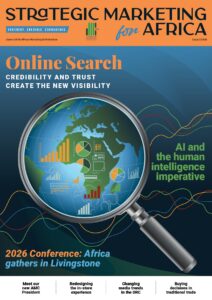
Online search behaviour has changed significantly with the rise of AI. How can African brands adapt to this new marketing landscape?

Researchers propose a framework for packaging that senses, learns and acts – making packaging an active, AI-powered tool against food waste.

Country needs marketers to build recognition and consumer trust around Malawian products and national brand, says Deputy Minister.

Fashion brand suspends giant lingerie high above the city’s streets, using shadows to create a moving billboard for pedestrians and motorists.

Researchers describe AI influencers as having a ‘dual identity’. Consumers evaluate both ‘person’ and ‘technology’ identities at once.

Reputation and trust, once modest influences on hotel choice, have become some of the strongest predictors of patronage, study finds.

South African brands are increasingly setting the global benchmark for customer loyalty strategies, organisers say.

Global influences among younger consumers are still present, but they are being filtered through a distinctly Zambian lens.

Researchers find that lack of perceived ‘genuine care’ is the mechanism connecting AI involvement to lower trust ratings.