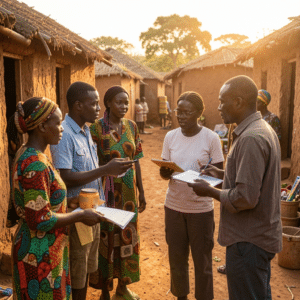
Pre-conference masterclass discusses taking African brands to the world
Participants challenged to identify, articulate and commercialise the cultural assets that make their brand ready for a global audience.
SOCIAL MEDIA
By our News Team | 2023
US media reports say the project is already far advanced, with the aim of creating a ‘sanely run’ alternative to Twitter.
Meta, owner of Facebook and Instagram, is reported to be far advanced with a strategy to create its own replacement for the troubled Twitter platform owned by Elon Musk.
This will be a standalone app that is likely to be named ‘Thread’. Currently it is simply known internally at Meta as ‘Project92’.
Illustration courtesy of Twitter
Reports of the new social media platform have been published by The Verge, a US-based news website that covers the technology industry. The website said it had watched a company-wide Meta meeting at which the project was discussed with employees.
“The forthcoming app, which, in the meeting today, Meta chief product officer Chris Cox called ‘our response to Twitter’, will use Instagram’s account system to automatically populate a user’s information,” The Verge reported.
Demand from creators and public figures
“We’ve been hearing from creators and public figures who are interested in having a platform that is sanely run [and] that they believe that they can trust and rely upon for distribution,” Cox is quoted as saying.
He said the company’s goal for the app was “safety, ease of use, reliability” and making sure that creators have a “stable place to build and grow their audiences”.
Cox added that Meta already has celebrities committed to using the app, including DJ Slime (a renowned name in the music industry) and was in discussions with other big names, including Oprah and the Dalai Lama.
“Twitter is experiencing financial problems as an advertising-reliant business. An advertiser boycott was triggered by concerns including the deterioration of moderation standards at the platform and a botched relaunch of Twitter’s subscription service, which led to a slew of verified impersonator accounts,” the London-based The Guardian newspaper reported.

Participants challenged to identify, articulate and commercialise the cultural assets that make their brand ready for a global audience.

Second outlet planned for Nairobi before year end, with Nigeria, South Africa and Morocco said to be future target markets.

Online search behaviour has changed significantly with the rise of AI. How can African brands adapt to this new marketing landscape?

Researchers propose a framework for packaging that senses, learns and acts – making packaging an active, AI-powered tool against food waste.

Country needs marketers to build recognition and consumer trust around Malawian products and national brand, says Deputy Minister.

Fashion brand suspends giant lingerie high above the city’s streets, using shadows to create a moving billboard for pedestrians and motorists.

Researchers describe AI influencers as having a ‘dual identity’. Consumers evaluate both ‘person’ and ‘technology’ identities at once.

Reputation and trust, once modest influences on hotel choice, have become some of the strongest predictors of patronage, study finds.

South African brands are increasingly setting the global benchmark for customer loyalty strategies, organisers say.

Global influences among younger consumers are still present, but they are being filtered through a distinctly Zambian lens.

Researchers find that lack of perceived ‘genuine care’ is the mechanism connecting AI involvement to lower trust ratings.