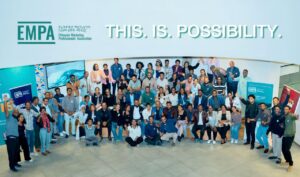
Pre-conference masterclass discusses taking African brands to the world
Participants challenged to identify, articulate and commercialise the cultural assets that make their brand ready for a global audience.
PUBLIC RELATIONS
By our News Team | 2023
Sailor who survived 24 days adrift on a meagre diet that included Heinz tomato sauce is to receive a new boat from the multinational brand.
In what may turn out to be one of the PR opportunities of the year, multinational food company Kraft Heinz is coming to the aid of a sailor who was lost at sea for 24 days and survived partly by eating a bottle of the company’s famous tomato sauce (ketchup).
Heinz – which is the company’s name as well as that of its famous tomato sauce – is giving 47-year-old Francois Elvis from Dominica, an island nation in the Caribbean, a spanking new boat to replace the old one that had to be abandoned at sea when he was rescued by the crew of a container ship.
Photo credit: Heinz via Instagram
Francois’s remarkable tale of survival – 24 days lost at sea with no communication and unable to steer his drifting boat – was all the more astonishing when he was taken to shore and doctors found him to be in good health. It turned out his diet comprised a bottle of Heinz tomato sauce, garlic powder and Maggi stock cubes, which he mixed with rainwater he collected on a cloth.
Sailor told his tale, then went home
Have told the tale of his ocean adventure to local authorities and media in Colombia, the country to which he was taken after his rescue, Francois lamented the loss of his boat and then returned home to Dominica.
Hearing of this, Heinz set out to find Francois via authorities in both countries, but with no success. Heinz then mounted an extensive social media campaign #FindtheKetchupBoatGuy, that quickly went viral. It reached nearly 5-million users and garnered more than 4,000 likes.
Eventually the elusive sailor was found by a media outlet in Dominica and the subsequent interview alerted Heinz executives, who contacted Francois and have now made plans to get a new boat to him.
“We received thousands of likes, shares and messages of kindness in our search to find Elvis François,” a statement on Heinz’s Instagram page said. “It was an incredible group effort across six continents that led to the hundreds of articles and leads, and our eventual contact with Elvis.”
Could this become a future PR industry case study on how to spot an opportunity and seize the moment?
.

Participants challenged to identify, articulate and commercialise the cultural assets that make their brand ready for a global audience.

Second outlet planned for Nairobi before year end, with Nigeria, South Africa and Morocco said to be future target markets.

Online search behaviour has changed significantly with the rise of AI. How can African brands adapt to this new marketing landscape?

Researchers propose a framework for packaging that senses, learns and acts – making packaging an active, AI-powered tool against food waste.

Country needs marketers to build recognition and consumer trust around Malawian products and national brand, says Deputy Minister.

Fashion brand suspends giant lingerie high above the city’s streets, using shadows to create a moving billboard for pedestrians and motorists.

Researchers describe AI influencers as having a ‘dual identity’. Consumers evaluate both ‘person’ and ‘technology’ identities at once.

Reputation and trust, once modest influences on hotel choice, have become some of the strongest predictors of patronage, study finds.

South African brands are increasingly setting the global benchmark for customer loyalty strategies, organisers say.

Global influences among younger consumers are still present, but they are being filtered through a distinctly Zambian lens.

Researchers find that lack of perceived ‘genuine care’ is the mechanism connecting AI involvement to lower trust ratings.