Analysing how impatience impacts consumer behaviour in an online world
Lessons from pizza delivery can be transferred to any business that sells products online and relies upon delivery channels.
SOCIAL MEDIA BANTER
By our African Marketing Confederation News Team | 2025
When a smaller fast-food brand launched a new meal, it’s bigger rivals began some banter – which benefitted the small brand most.
The degree to which social media engagement translates into sales for businesses has been an open question. In many cases, it can be hard to measure.
Thiago Lazaro from Pexels
However, a new study has established how engaging in a little banter with rival brands over social media platform X helped drive in-store visits, particularly in the context of launching a new product.
The first caveat say the authors of the study, led by Ashutosh Bhave, an Assistant Professor of Marketing at the University of Alabama in the US, is that ‘banter’ does not mean ‘disparaging attacks’. Banter, they suggest, is spontaneous and not part of a planned marketing strategy.
A series of online interactions in 2019 between three US fast-food chains – Popeye’s Louisiana Chicken, Wendy’s and Chick-fil-A – was the example studied for the research. It followed the release of a new spicy chicken sandwich by Popeye’s.
Chick-fil-A took a playful jab at Popeye’s, Wendy’s joined in, and Popeye’s answered back – with all of them making the case for their own product. The tone of the exchange was playful and light, leaning into informal language like “Y’all good?”
The upshot was this largely genial banter playing out in real time greatly increased the volume of tweets associated with Popeye’s, Chick-fil-A and Wendy’s (by 2,111%, 1,036% and 920%, respectively).
More importantly, it also drove offline sales for Popeye’s, which saw a 54% increase in visits per store. Alas, Chick-fil-A and Wendy’s did not see a similar spike for in-store traffic. This suggests that engaging in banter may help a rival, but not you.
Bigger brand made a tactical mistake
Arguably, Chick-fil-A likely made a tactical mistake in engaging with Popeye’s, a much smaller company.
The one thing that Popeye’s and Chick-fil-A have in common is that their customers like chicken sandwiches. So, Chick-fil-A was unintentionally letting their customers know about Popeye’s new sandwich. Therefore, the banter didn’t so much hurt Chick-fil-A as help Popeye’s.
“Popeye’s is a much smaller player in the industry,” Bhave comments. “Chick-fil-A kind of handed the ball to Popeye’s, which suddenly put them in the same league.”
Bhave says his research focused not so much on social media, but on how external events can impact sales – by which he means events that create a clear ‘before’ and ‘after’.
In this case, the event was Chick-fil-A’s decision to engage with Popeye’s on social media a week after the rival had launched a new product. Prior to that engagement, Popeye’s had not seen a big uptick in in-store visits as a result of the new meal launch.
The authors note that if companies want to engage in banter with competing brands, they should follow two rules. One: Find ways to infuse humour rather than using disparaging tones. Two: Refrain from interacting with rivals about their newly launched products.
The study, titled ‘Clashing on Social Media: Exploring the Impact of Twitter Banter Among Competing Fast-Food Brands’ is published in the Journal of Social Media in Society. You can find out more about it here.

Lessons from pizza delivery can be transferred to any business that sells products online and relies upon delivery channels.

The platform along the Lobito Corridor is expected to include warehouses, a fuel terminal, a mineral terminal and industrial areas.

Much of the broader conversation around AI in market research assumes conditions that do not consistently exist across many African markets, writes Soyinka Witness.
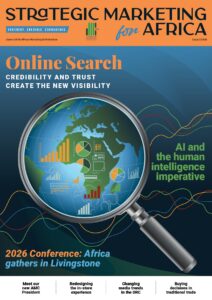
Consumers are asking AI which retailer offers the best deal, comparing products or researching brands before visiting a website or store.

Kenya Ports Authority is working to improve cargo flow and efficiency to support growing trade volumes at vital import-export gateway.

African consumers want ethical, responsible choices. Therefore, brand growth hinges on making sustainable choices affordable and relevant.

Examining the tech-hype trap and why human judgement, not technology, will pave the way to competitive advantage in Africa.

Strategic senior appointment comes at a time when the local advertising-intelligence landscape is entering a period of significant change.

Ghana has shifted decisively into consumer-led recovery, with Côte d’Ivoire and Cameroon following more gradually.

AMC President discusses the upcoming conference’s ‘full circle’ and the gathering’s role in navigating marketing’s paradigm shift.

Africa’s retail future may be led not by size, but by those who most effectively remove the friction between customer intent and transaction.