Pre-conference masterclass discusses taking African brands to the world
Participants challenged to identify, articulate and commercialise the cultural assets that make their brand ready for a global audience.
BUSINESS STRATEGY
By our African Marketing Confederation News Team | 2025
Hayat Market supermarket chain continues to invest in the Horn of Africa country and is about to unveil its fifth outlet in the capital city.
Although security challenges and economic risks remain, the economy of Somalia is showing signs of improvement. So much so, that the Dubai-based Safa International group is continuing to invest in the country and is about to open its fifth supermarket in the capital, Mogadishu.
Its Hayat Market supermarket chain, which first opened its doors in 2020, is unveiling its newest outlet in the upgraded Ali Kamin neighbourhood.
A social media promotion for the new outlet. Photo: Hayat Market via Facebook
The multi-storey supermarket will sell mostly imported brands, typically sourced via the UAE, and the chain is a major importer of premium FMCG products.
“Hayat Market stores typically have multiple floors and operate as a mini mall. They have food retail on the ground floor and a substantial non-food offer, including electronics, clothing, toys, furniture and homewares, on upper floors,” explains Trendtype, the emerging markets consultancy.
Hayat Market promotes itself as “Somalia’s largest and most modern supermarket services provider”. Safa International, its parent company, has a range of interests in 10 countries, mainly in East Africa and the MENA region. These include mass-market food products and luxury FMCG goods.
Mogadishu’s growing pockets of affluence
Mogadishu has a population of over two million people, most of whom are poor after decades of civil conflict. However, there are growing pockets of affluence in more secure neighbourhoods where government offices, international aid organisations, and businesses are located.
Wealthy members of the Somali diaspora are increasingly investing in property in Mogadishu and remittances from abroad are a source of foreign income for many people, which is helping to grow the economy.
According to an International Monetary Fund report published in December 2024, Somalia’s real GDP growth outlook has improved, though challenges and risks remain significant.
Positive trends in agriculture, exports and remittances in 2024 are expected to continue in 2025. As a result, real GDP growth has been upgraded to a predicted 4% in 2024 and 2025.
“Despite security challenges, the Somali government remains steadfast in its fight against terrorism and continues to work with international partners to ensure a successful transition from the current African Union Transition Mission to a new force,” the IMF says in the report.
Somalia has a population of 21,2-million people, according to a 2025 Encyclopaedia Brittanica estimate. About three-fifths of the population follow a mobile way of life, pursuing nomadic pastoralism or agropastoralism (settled pastoralists).

Participants challenged to identify, articulate and commercialise the cultural assets that make their brand ready for a global audience.

Second outlet planned for Nairobi before year end, with Nigeria, South Africa and Morocco said to be future target markets.

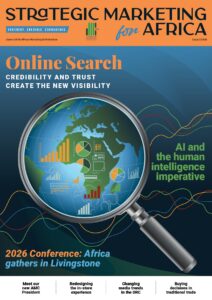
Online search behaviour has changed significantly with the rise of AI. How can African brands adapt to this new marketing landscape?

Researchers propose a framework for packaging that senses, learns and acts – making packaging an active, AI-powered tool against food waste.

Country needs marketers to build recognition and consumer trust around Malawian products and national brand, says Deputy Minister.

Fashion brand suspends giant lingerie high above the city’s streets, using shadows to create a moving billboard for pedestrians and motorists.

Researchers describe AI influencers as having a ‘dual identity’. Consumers evaluate both ‘person’ and ‘technology’ identities at once.

Reputation and trust, once modest influences on hotel choice, have become some of the strongest predictors of patronage, study finds.

South African brands are increasingly setting the global benchmark for customer loyalty strategies, organisers say.

Global influences among younger consumers are still present, but they are being filtered through a distinctly Zambian lens.

Researchers find that lack of perceived ‘genuine care’ is the mechanism connecting AI involvement to lower trust ratings.