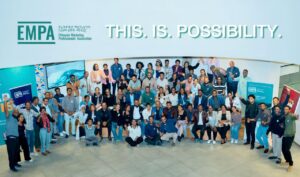
Pre-conference masterclass discusses taking African brands to the world
Participants challenged to identify, articulate and commercialise the cultural assets that make their brand ready for a global audience.
DIGITAL SKILLS
By our African Marketing Confederation News Team | 2024
Collaboration with Federal Ministry is part of President Bola Ahmed Tinubu’s efforts to create two million digital jobs in Nigeria by 2025.
Nigeria’s Federal Ministry of Communications, Innovation & Digital Economy (FMCIDE) has formed an alliance with Aleph Group, a leading global enabler of digital advertising, to empower over 2,600 young people with essential digital advertising skills.
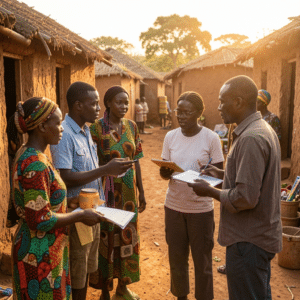
Photo by Fauxels from Pexels
This is part of the ministry’s flagship project, the 3 Million Technical Talent Programme (3MTT).
Through this collaboration, young Nigerians will gain access to Aleph’s Digital Ad Expert (DAE) programme, equipping them with knowledge and skills necessary to work in today’s digital landscape.
Aleph Group connects advertisers with consumers across more than 130 emerging markets. It facilitates engagement on digital platforms such as Google, Meta, Microsoft, Pinterest, Reddit, Snap, Spotify, TikTok, Twitch, Uber and X.
In line with the goal of Nigerian President Bola Ahmed Tinubu to create two million digital jobs by 2025, the DAE programme is claimed to quickly and effectively train many participants in support of digital economy growth in the country.
Bringing Nigeria’s economy into the digital age
“Teaching our youth digital advertising skills is crucial for advancing Nigeria’s economy in the digital age,” says Francis Sani, Special Adviser on Innovation, Entrepreneurship, and Capital from the Federal Ministry of Communications, Innovation & Digital Economy.
The DAE’s focus on practical, industry-relevant skills, makes it an ideal solution for addressing Nigeria’s digital skills gap, Aleph says in a media statement.
“The programme will be offered in both live and self-paced formats, ensuring flexibility and accessibility for participants across the country,” comments Aleph Group’s Managing Director for West Africa, Stanislaus Martins.
Upon completion, graduates will receive a globally recognised Digital Ad Expert certificate, granting them access to Aleph’s extensive alumni network and potentially opening doors to career opportunities in the digital advertising industry.
The company says it aims to train 800,000 students across the continent through its DAE programme, and this alliance represents a significant stride towards achieving that goal.

Participants challenged to identify, articulate and commercialise the cultural assets that make their brand ready for a global audience.

Second outlet planned for Nairobi before year end, with Nigeria, South Africa and Morocco said to be future target markets.

Online search behaviour has changed significantly with the rise of AI. How can African brands adapt to this new marketing landscape?

Researchers propose a framework for packaging that senses, learns and acts – making packaging an active, AI-powered tool against food waste.

Country needs marketers to build recognition and consumer trust around Malawian products and national brand, says Deputy Minister.

Fashion brand suspends giant lingerie high above the city’s streets, using shadows to create a moving billboard for pedestrians and motorists.

Researchers describe AI influencers as having a ‘dual identity’. Consumers evaluate both ‘person’ and ‘technology’ identities at once.

Reputation and trust, once modest influences on hotel choice, have become some of the strongest predictors of patronage, study finds.

South African brands are increasingly setting the global benchmark for customer loyalty strategies, organisers say.

Global influences among younger consumers are still present, but they are being filtered through a distinctly Zambian lens.

Researchers find that lack of perceived ‘genuine care’ is the mechanism connecting AI involvement to lower trust ratings.