Landmark gathering gets underway with delegates from over 30 countries
Opening plenary hears that securing Africa’s economic future requires businesses to discover new customers and cross-border opportunities.
RETAIL STRATEGY
By our African Marketing Confederation News Team | 2025
The chain, which has at times been a controversial presence, now has multiple outlets in Nairobi, as well as in Mombasa and Kisumu.
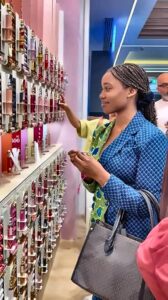
China Square, the Chinese-owned retail chain known for selling affordable products, has expanded its Kenyan presence to seven stores by opening two new outlets: one at the flagship Two Rivers Mall and the other at the Greenspan Mall. Both are in Nairobi.
The chain now has multiple outlets in Nairobi, as well as a presence in Mombasa and Kisumu. It began operating in Kenya in 2022 and has at times been a controversial presence.
Photo: China Square via Facebook
In March 2023, for example, small traders marched in their hundreds to the deputy president’s office in Nairobi to demand an end to what they called a ‘China invasion’. According to a BBC report at the time, the traders were concerned that China Square was undercutting their prices.
The China Square store at Two Rivers Mall occupies 700 square metres and is said to account for 10% of the mall’s total floor space. Two Rivers claims to be the largest shopping mall in sub-Saharan Africa outside of South Africa.
Greenspan Mall is located in Donholm, a residential and commercial neighbourhood about 8km east of the central business district.
Further expansion is on the cards
China Square Managing Director Lei Cheng, quoted in a news report by radio station Capital FM, said the retailer has plans for further growth and wants to expand its portfolio to other cities in the country.
According to Trendtype, the emerging markets consultancy, China Square initially imported 90% of its products from China. It now claims to import only 60% of its products, with the rest sourced domestically.
“The growth of China Square is part of a broader pattern of Chinese general merchandise retailers building big-box stores in a number of markets,” Trendtype says.
“In September 2024, a new Chinese superstore opened in a space in Kampala that had previously been an anchor tenancy for Shoprite. In April 2024, the EU Chinatown Supermarket opened in Tamale, northern Ghana, one of several large Chinese stores in the country.”

Opening plenary hears that securing Africa’s economic future requires businesses to discover new customers and cross-border opportunities.

Participants challenged to identify, articulate and commercialise the cultural assets that make their brand ready for a global audience.

Second outlet planned for Nairobi before year end, with Nigeria, South Africa and Morocco said to be future target markets.

Online search behaviour has changed significantly with the rise of AI. How can African brands adapt to this new marketing landscape?

Researchers propose a framework for packaging that senses, learns and acts – making packaging an active, AI-powered tool against food waste.

Country needs marketers to build recognition and consumer trust around Malawian products and national brand, says Deputy Minister.

Fashion brand suspends giant lingerie high above the city’s streets, using shadows to create a moving billboard for pedestrians and motorists.

Researchers describe AI influencers as having a ‘dual identity’. Consumers evaluate both ‘person’ and ‘technology’ identities at once.

Reputation and trust, once modest influences on hotel choice, have become some of the strongest predictors of patronage, study finds.

South African brands are increasingly setting the global benchmark for customer loyalty strategies, organisers say.

Global influences among younger consumers are still present, but they are being filtered through a distinctly Zambian lens.