Pre-conference masterclass discusses taking African brands to the world
Participants challenged to identify, articulate and commercialise the cultural assets that make their brand ready for a global audience.
RETAIL STRATEGY
By our African Marketing Confederation News Team | 2024
Ikea competitor is growing its global footprint and sees opportunity in North African country’s growing economy and consumer sophistication.
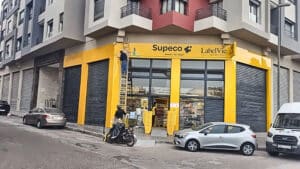
Jysk, the large Danish furniture and home décor retailer that competes with the likes of Ikea, has announced plans to enter the Moroccan market in 2025.
Photo: Jysk
The company already operates over 3,400 stores in 48 countries and is on a global expansion drive. Last financial year its sales rose 7.6 % to US$5.9-billion.
It views Morocco’s growing economy and consumer sophistication as a prime opportunity for further expansion.
According to international media reports, its first outlet in the North African country will be a ‘dark’ store that services online sales or click-and-collect operations, but is not open to the public. It is due to open in in the second quarter of 2025 in Casablanca.
“When we are present in a country, and we want to shorten the delivery time, a dark store is a great option for us. This helps us to attract new customers and create a more seamless experience,” Ole Thomsen, Executive Vice President, Logistics is quoted as saying by the publication Retail Technology Innovation Hub.
More choice and better value
“For Moroccan consumers, Jysk’s arrival promises not only more choice but also the potential for better value,” reports 7News Morocco.
“However, it remains to be seen how established players like Ikea and Kitea will respond to the heightened competition. What is certain is that the Moroccan furniture market is on the brink of a significant transformation.”
Kitea is a Moroccan retailer of household furniture, office furniture and home accessories present across 17 cities and with over 20 stores in the country. It also has two franchise stores in Equatorial Guinea and the Democratic Republic of Congo (DRC).
Adds 7News Morocco: “Jysk’s success in other markets hints at the potential impact it could have in Morocco. In Europe, the brand has gone head-to-head with Ikea, carving out a niche in cities across France and Belgium. It plans to open 125 additional stores in Belgium in the coming years, highlighting its aggressive growth strategy.”

Participants challenged to identify, articulate and commercialise the cultural assets that make their brand ready for a global audience.

Second outlet planned for Nairobi before year end, with Nigeria, South Africa and Morocco said to be future target markets.

Online search behaviour has changed significantly with the rise of AI. How can African brands adapt to this new marketing landscape?

Researchers propose a framework for packaging that senses, learns and acts – making packaging an active, AI-powered tool against food waste.

Country needs marketers to build recognition and consumer trust around Malawian products and national brand, says Deputy Minister.

Fashion brand suspends giant lingerie high above the city’s streets, using shadows to create a moving billboard for pedestrians and motorists.

Researchers describe AI influencers as having a ‘dual identity’. Consumers evaluate both ‘person’ and ‘technology’ identities at once.

Reputation and trust, once modest influences on hotel choice, have become some of the strongest predictors of patronage, study finds.

South African brands are increasingly setting the global benchmark for customer loyalty strategies, organisers say.

Global influences among younger consumers are still present, but they are being filtered through a distinctly Zambian lens.

Researchers find that lack of perceived ‘genuine care’ is the mechanism connecting AI involvement to lower trust ratings.