Pre-conference masterclass discusses taking African brands to the world
Participants challenged to identify, articulate and commercialise the cultural assets that make their brand ready for a global audience.
A.M.C. MEMBER NEWS
By our African Marketing Confederation News Team | 2024
Idy Enang, President of the NIMN and a veteran marketer and broadcaster, will share insights on what sets the marketing greats apart.
There are those who build brands, market effectively and lead industries. And then there are those who don’t. In short, all marketing efforts are not created equal.
Idy Enang. Photo: Supplied
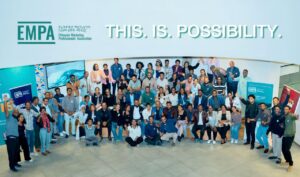
With this in mind, the Ethiopian Marketing Professionals Association – a member of the African Marketing Confederation – is hosting a virtual event on Friday, 15 November with Idorenyen (Idy) Enang, President of the National Institute of Marketing of Nigeria (NIMN).
He will share his insights into what sets the marketing greats apart. What’s the mindset of those who drive real impact? What are the strategies behind building brands that last, marketing with purpose, and leading entire industries?
“Expect a conversation that unpacks high-performance marketing, generational leadership, and the unique approaches that have powered Idy’s journey across global giants like Coca-Cola, Guinness and Samsung,” the Ethiopian Marketing Professionals Association (EMPA) says in a post on its LinkedIn page.
“The event is an invitation to rethink your approach, recalibrate your strategies, and tap into the mindset of those who know how to make marketing matter.”
Extensive marketing and business career
Enang has enjoyed a marketing and business career that spans 35 solid years across various sectors – oil and gas, manufacturing, electronics, technology and beauty.
In that time, he’s worked with major brands – Cadbury, Coca-Cola, Samsung and L’Oréal – and then returned to basics as a radio producer running an on-air business school, founding a social enterprise named Corporate Shepherds, and following a passion to build people and organisations.
All the while, he’s had a special place in his heart for marketing, being a Fellow of the NIMN (a founder member of the African Marketing Confederation) in addition to his current leadership role. He is also a Fellow of the Advertising Regulatory Council of Nigeria (ARCON).
The virtual event starts at 4pm East Africa Time (EAT) on 15 November. You can find out more here.

Participants challenged to identify, articulate and commercialise the cultural assets that make their brand ready for a global audience.

Second outlet planned for Nairobi before year end, with Nigeria, South Africa and Morocco said to be future target markets.

Online search behaviour has changed significantly with the rise of AI. How can African brands adapt to this new marketing landscape?

Researchers propose a framework for packaging that senses, learns and acts – making packaging an active, AI-powered tool against food waste.

Country needs marketers to build recognition and consumer trust around Malawian products and national brand, says Deputy Minister.

Fashion brand suspends giant lingerie high above the city’s streets, using shadows to create a moving billboard for pedestrians and motorists.

Researchers describe AI influencers as having a ‘dual identity’. Consumers evaluate both ‘person’ and ‘technology’ identities at once.

Reputation and trust, once modest influences on hotel choice, have become some of the strongest predictors of patronage, study finds.

South African brands are increasingly setting the global benchmark for customer loyalty strategies, organisers say.

Global influences among younger consumers are still present, but they are being filtered through a distinctly Zambian lens.

Researchers find that lack of perceived ‘genuine care’ is the mechanism connecting AI involvement to lower trust ratings.