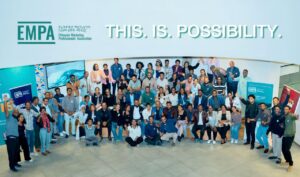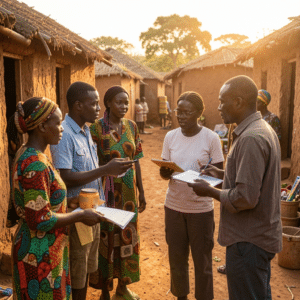
Pre-conference masterclass discusses taking African brands to the world
Participants challenged to identify, articulate and commercialise the cultural assets that make their brand ready for a global audience.
By our African Marketing Confederation News Team | 2024
Charles Ballard has extensive experience in the Kenyan market, and expertise in e-commerce, retail, and financial services.
Twiga Foods, the Kenyan business-to-business marketplace platform that sources produce directly from farmers and delivers it to urban retailers, has appointed Charles Ballard as its new Chief Executive Officer.
He has extensive experience of the Kenyan market, having been in the country for nine years, and has expertise in e-commerce, retail, and financial services.
Ballard was previously CEO of Jumia Kenya, an e-commerce company, where he led the transformation of the business toward profitability.
Charles Ballard. Photo: LinkedIn
He joined Jumia in 2019 and also served as Head of Performance and Planning, Chief Operating Officer, and as Senior Vice President – Commercials for the company.
Appointment will bolster Twiga Foods’ ambition
“The appointment of a new CEO will bolster Twiga Foods’ ambition to continue to deliver on its mission to transform food supply chains in Africa,” Twiga says in a statement.
Hein Pretorius, Chairman of Twiga’s board of directors, comments: “We are delighted to welcome Charles as our new Chief Executive. His deep understanding of the Kenyan e-commerce and retail landscape, his proven operational grip, his entrepreneurial drive, and his passion for the Twiga Foods opportunity make him the ideal leader to steer Twiga into its next phase of growth and success.”
Ballard has also been an executive with the Agency for Technical Cooperation and Development (commonly known as ACTED), a French humanitarian non-governmental organisation.
He holds a master’s degree from the ESSEC Business School (France) and a BSc in International Development from the London School of Economics.

Participants challenged to identify, articulate and commercialise the cultural assets that make their brand ready for a global audience.

Second outlet planned for Nairobi before year end, with Nigeria, South Africa and Morocco said to be future target markets.

Online search behaviour has changed significantly with the rise of AI. How can African brands adapt to this new marketing landscape?

Researchers propose a framework for packaging that senses, learns and acts – making packaging an active, AI-powered tool against food waste.

Country needs marketers to build recognition and consumer trust around Malawian products and national brand, says Deputy Minister.

Fashion brand suspends giant lingerie high above the city’s streets, using shadows to create a moving billboard for pedestrians and motorists.

Researchers describe AI influencers as having a ‘dual identity’. Consumers evaluate both ‘person’ and ‘technology’ identities at once.

Reputation and trust, once modest influences on hotel choice, have become some of the strongest predictors of patronage, study finds.

South African brands are increasingly setting the global benchmark for customer loyalty strategies, organisers say.

Global influences among younger consumers are still present, but they are being filtered through a distinctly Zambian lens.

Researchers find that lack of perceived ‘genuine care’ is the mechanism connecting AI involvement to lower trust ratings.