Watchdog instructs auto brand to remove or amend TV ad campaign
SA’s Advertising Regulatory Board finds Kia advertisement could be offensive to people with certain health disorders.
SUPPLY CHAIN
By our African Marketing Confederation News Team | 2025
Aim is to expand this model nationwide in an effort to build a climate-smart and inclusive fisheries supply chain.
Kuza Freezers, a Kenyan-based social enterprise operating in the fisheries sector, has launched its first solar-powered cold storage and fish marketplace hub in the Indian Ocean city of Mombasa.
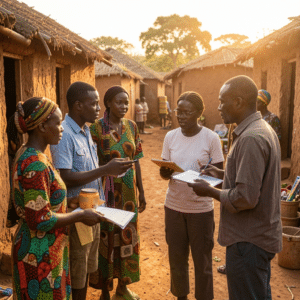
The Kuza Freezers launch in Mombasa. Photo: Kuza Freezers
The hub serves both small-scale fisherfolk and fish vendors by using solar-powered refrigeration technology to improve preservation of fish stocks and expand market access for the vendors.
Kuza Freezers aggregates fish from local communities and preserves the quality using cold storage units. It then links the supply to buyers in major urban markets – such as restaurants, hotels and fish wholesalers.
The social enterprise says it aims to expand this model nationwide in an effort to build a climate-smart and inclusive fish supply chain.
Kusa Freezers positions itself as a value chain integrator by offering storage, logistics and market access – a business models that ensures consistency in supply and better earnings for producers who have long faced barriers due to poor infrastructure.
The meat and fish sectors are seeking long-term solutions
“The launch comes at a time when both the meat and fish sectors are seeking long-term solutions to reduce losses and maintain quality in a warming climate,” reports Food Business Middle East & Africa, adding that retail meat businesses in Kenya are facing rising losses due to spoilage.
According to a 2023 study by the University of Nairobi, retail stores suffer weekly meat losses due to microbial spoilage and moisture loss. “Major challenges faced by meat retailers include fly menace and unreliable electricity supply,” the study found.
In its latest issue (Issue 2 2025), Strategic Marketing for Africa, the magazine of the African Marketing Confederation, reports that poor cold chain logistics are resulting in massive food wastage in Africa.
“Nigeria reportedly has less than 4% of its cold chain capacity requirement. Much of Africa faces a similar challenge,” the report states.
In a blog post published in September 2024, logistics and infrastructure consultancy ALG Global notes that, on average, Africa wastes about 50% of its food due to inefficient supply chain infrastructure, particularly in agriculture.
In sub-Saharan Africa, where over 60% of the population are smallholder farmers, inadequate cold chain facilities worsen this issue, ALG Global noted.

SA’s Advertising Regulatory Board finds Kia advertisement could be offensive to people with certain health disorders.

Global study finds AI is helping marketers produce more – but is not creating the time and creative space they expected.

Urban Africa will double its footprint, adding the equivalent of more than 4,000 Manhattans or almost 400 Singapores, The Economist reports.

Luc Demez brings experience from Europe and African countries as the Carrefour brand looks to expand into Nigeria with a local partner.

What makes brands successful in Africa? A summary of the award-winning paper presented at Esomar’s first conference in Africa.

Woolworths supermarket chain embraces an AI-powered chef as it leverages two decades of recipes to answer an age-old family question.

Consumers are prioritising their wellness despite tighter wallets, meaning sportswear remains one of the most resilient areas of fashion.

Nominations for the 2026 African Marketing Confederation and African Supply Chain Confederation awards close on 31 July.

Consumers may stick with troubled brands because their emotional attachment overrides the perceived risk, study finds.

Book draws a line between customer experience – the private-sector marketing discipline – and what its authors call ‘Citizen Experience’.

Six years ago, the historic South African department store chain was in voluntary business rescue. Now it plans to open 50 new stores.