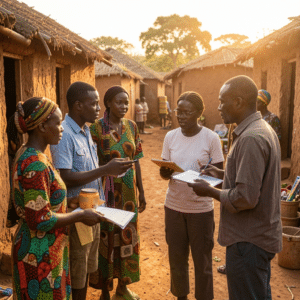
Pre-conference masterclass discusses taking African brands to the world
Participants challenged to identify, articulate and commercialise the cultural assets that make their brand ready for a global audience.
RETAIL STRATEGY
By our African Marketing Confederation News Team | 2024
Supermarket chain has been playing second fiddle to market leader Checkers, but believes it’s now back on the right track.
South Africa’s Pick n Pay supermarket and retail group, which has been struggling for some time to compete with rival Checkers, is planning to open 100 new stores within the next three years.
Pick n Pay Clothing has performed better than the group’s supermarkets
This is according to several local media reports quoting CEO Sean Summers, who has been leading a turnaround strategy for the business.
Once the darling of South African shoppers, it has since fallen on harder times. Despite this, it continues to be the second-largest grocery chain in the country.
More recently, Pick n Pay has been known for closing underperforming outlets rather than opening new ones, and reportedly closed 17 stores in the past few months.
But it seems that times are changing. “We’re on a journey; we’ve commenced. We’re in a profoundly different place to what we were in six months ago, never mind a year ago,” Summers is quoted as saying by Business Report.
“As part of an ongoing revitalisation effort, the company aims to refresh existing stores that have been ‘left behind” amid the competitive landscape of grocery retailing,” Business Report states. It further quotes Summers as saying the stores “need to be modernised and brought up to speed”.
Former CEO came back to lead turnaround
Summers was previously CEO of Pick n Pay between 1999 and 2007. He was reappointed in late 2023 when the incumbent, Pieter Boone, left suddenly after just two-and-a-half years in the role.
Among the bright spots for Pick n Pay amidst the challenges of its supermarket business, however, has been the performance of its mostly stand-alone Pick n Pay Clothing outlets.
According to a company press release, the retailer has added 32 new clothing stores to its network to date in 2024, with plans to open another 12 by the end of the year.
Many existing stores, such as at Rosebank and Mall of Africa in Johannesburg, as well as at Gateway in Durban, have also been revamped as part of its expansion strategy for the clothing business.
There are now 386 standalone corporate Pick n Pay Clothing stores. The value-based clothing retailer also has a presence in over 100 Pick n Pay supermarket stores.

Participants challenged to identify, articulate and commercialise the cultural assets that make their brand ready for a global audience.

Second outlet planned for Nairobi before year end, with Nigeria, South Africa and Morocco said to be future target markets.

Online search behaviour has changed significantly with the rise of AI. How can African brands adapt to this new marketing landscape?

Researchers propose a framework for packaging that senses, learns and acts – making packaging an active, AI-powered tool against food waste.

Country needs marketers to build recognition and consumer trust around Malawian products and national brand, says Deputy Minister.

Fashion brand suspends giant lingerie high above the city’s streets, using shadows to create a moving billboard for pedestrians and motorists.

Researchers describe AI influencers as having a ‘dual identity’. Consumers evaluate both ‘person’ and ‘technology’ identities at once.

Reputation and trust, once modest influences on hotel choice, have become some of the strongest predictors of patronage, study finds.

South African brands are increasingly setting the global benchmark for customer loyalty strategies, organisers say.

Global influences among younger consumers are still present, but they are being filtered through a distinctly Zambian lens.

Researchers find that lack of perceived ‘genuine care’ is the mechanism connecting AI involvement to lower trust ratings.