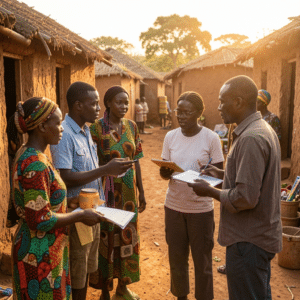
Pre-conference masterclass discusses taking African brands to the world
Participants challenged to identify, articulate and commercialise the cultural assets that make their brand ready for a global audience.
BUSINESS TURNAROUNDS
By our African Marketing Confederation News Team | 2026
Scale of the rebound under new owner Tolaram is notable in a market recovering from currency devaluation and weak consumer buying power.
Beverages company Guinness Nigeria, which was bought by the Singapore-based Tolaram group in 2024 from Diageo, has reported strong profits following a turbulent post-takeover period.
Girish Sharma (right) discussing the Guinness Nigeria turnaround at the 2025 AMC Conference
Guiness Nigeria – which has seven trademark brands including Smirnoff vodka and Captain Morgan rum in addition to Guinness beer products – reported that profit came in at N41.2-billion, reversing a N54.8-billion loss previously. Net finance costs dropped to N20.9-billion from N99.1-billion, easing pressure on the bottom line. One United States dollar is equal to 1,341 Nigerian naira
“The latest results cover 18 months, extending beyond the traditional 12-month cycle. Even so, the scale of the rebound is notable in a market just recovering from currency devaluation, surging input costs and weak consumer purchasing power,” comments Business Day Nigeria.
“With revenue at a record high and equity rebuilt, the brewer has bought itself breathing room. The next test would be proving the recovery can endure in a market where costs remain volatile and competition is fierce.”
Next phase of growth
Tolaram acquired Diageo’s shareholding in Guinness Nigeria in June 2024. At the time, Diageo commented: “Diageo remains deeply committed to Nigeria and will retain ownership of the Guinness brand, which will be licensed to Guinness Nigeria for the long-term, enabling the next phase of growth and development of Guinness Nigeria under the stewardship of Tolaram.”
Girish Sharma, a seasoned executive with over two decades of experience within Tolaram, took over as MD and CEO in October 2024.
At the 2025 African Marketing Confederation conference held in Accra, Ghana, he took to the stage in a CEO Session to discuss the turnaround of the business since he assumed leadership.
In a frank discussion anchored by Ghanaian market researcher Ato Micah, he outlined the critical decisions and on-the-ground actions taken by the new Tolaram management team following the takeover from Diageo. In the period following the takeover, revenue rose by 66%, operating profit by 87% and net profit by 130%.

Participants challenged to identify, articulate and commercialise the cultural assets that make their brand ready for a global audience.

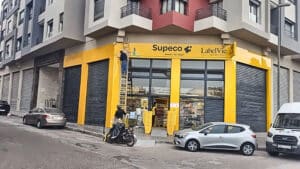
Second outlet planned for Nairobi before year end, with Nigeria, South Africa and Morocco said to be future target markets.

Online search behaviour has changed significantly with the rise of AI. How can African brands adapt to this new marketing landscape?

Researchers propose a framework for packaging that senses, learns and acts – making packaging an active, AI-powered tool against food waste.

Country needs marketers to build recognition and consumer trust around Malawian products and national brand, says Deputy Minister.

Fashion brand suspends giant lingerie high above the city’s streets, using shadows to create a moving billboard for pedestrians and motorists.

Researchers describe AI influencers as having a ‘dual identity’. Consumers evaluate both ‘person’ and ‘technology’ identities at once.

Reputation and trust, once modest influences on hotel choice, have become some of the strongest predictors of patronage, study finds.

South African brands are increasingly setting the global benchmark for customer loyalty strategies, organisers say.

Global influences among younger consumers are still present, but they are being filtered through a distinctly Zambian lens.

Researchers find that lack of perceived ‘genuine care’ is the mechanism connecting AI involvement to lower trust ratings.