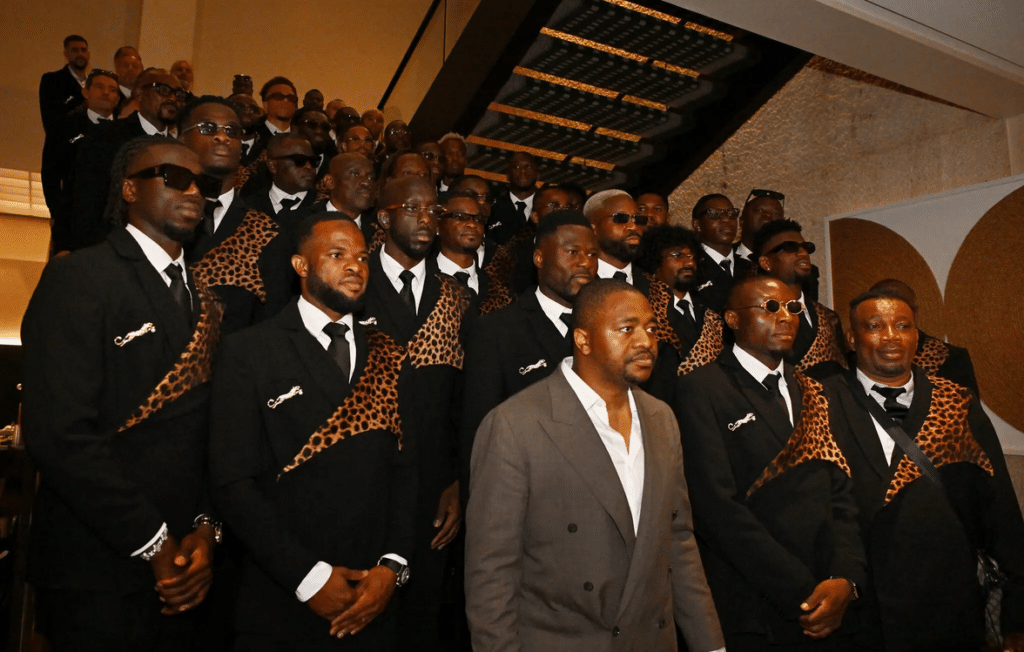
For many African teams at the FIFA World Cup, some of the most powerful moments have happened before a ball was even kicked.
When DR Congo’s players arrived wearing elegant custom-made suits inspired by the country’s iconic La Sape culture, they immediately captured global attention. When Côte d’Ivoire showcased outfits drawing on traditional textile heritage and contemporary African design, they reminded the world that African creativity is every bit as compelling as African football.
These images spread across social media, fashion publications and international news outlets, generating millions of impressions and sparking conversations far beyond the tournament itself, writes Yannick Lefang, CEO of Africa-focused market intelligence company Kasi Insight.
In a blog post published this week, he notes that it would be easy to dismiss these moments as simply fashion statements. In reality, they represent something much bigger. They are examples of how Africa is increasingly exporting culture, identity and creativity alongside its traditional exports.
“For decades, Africa’s economic story has been told largely through commodities,” Lefang writes. “The continent exports oil, minerals, coffee, cocoa, tea and agricultural products. While these industries remain important, they do not fully capture where some of Africa’s most exciting opportunities may emerge in the future.
“Increasingly, Africa’s competitive advantage lies not only in what it produces, but in who it is.”
You don’t necessarily need expensive marketing campaigns
Lefang emphasises that the World Cup has become a global stage for nation branding. Countries spend billions promoting tourism, investment and trade opportunities.
“Yet sometimes a well-designed outfit can achieve what expensive marketing campaigns struggle to accomplish. In a single appearance, a football team can introduce the world to local designers, cultural traditions, craftsmanship and creative industries.
“Behind every outfit worn by a player is an ecosystem of designers, tailors, photographers, stylists, manufacturers and entrepreneurs whose work contributes to economic activity and job creation.”
Lefang points out that other regions of the world have long understood the economic power of culture. For example, South Korea transformed its global image through music, entertainment and fashion.
The United States exports Hollywood as successfully as it exports technology. France has built entire industries around luxury, design and lifestyle. These countries recognise that culture is not separate from the economy; culture is part of the economy.
“Africa is beginning to demonstrate the same potential,” he believes. “Across the continent, creative industries are expanding rapidly. African music dominates global streaming charts. Fashion designers are gaining international recognition.
“Filmmakers, content creators, artists and digital entrepreneurs are reaching audiences that would have been unimaginable a decade ago. What we are witnessing is the emergence of culture as a serious economic asset.”
Lefang concludes: “The World Cup has reminded us that Africa’s greatest assets are not only found underground or in its natural resources. They are found in its people, its ideas and its creativity.”
You can read the original blog post here.