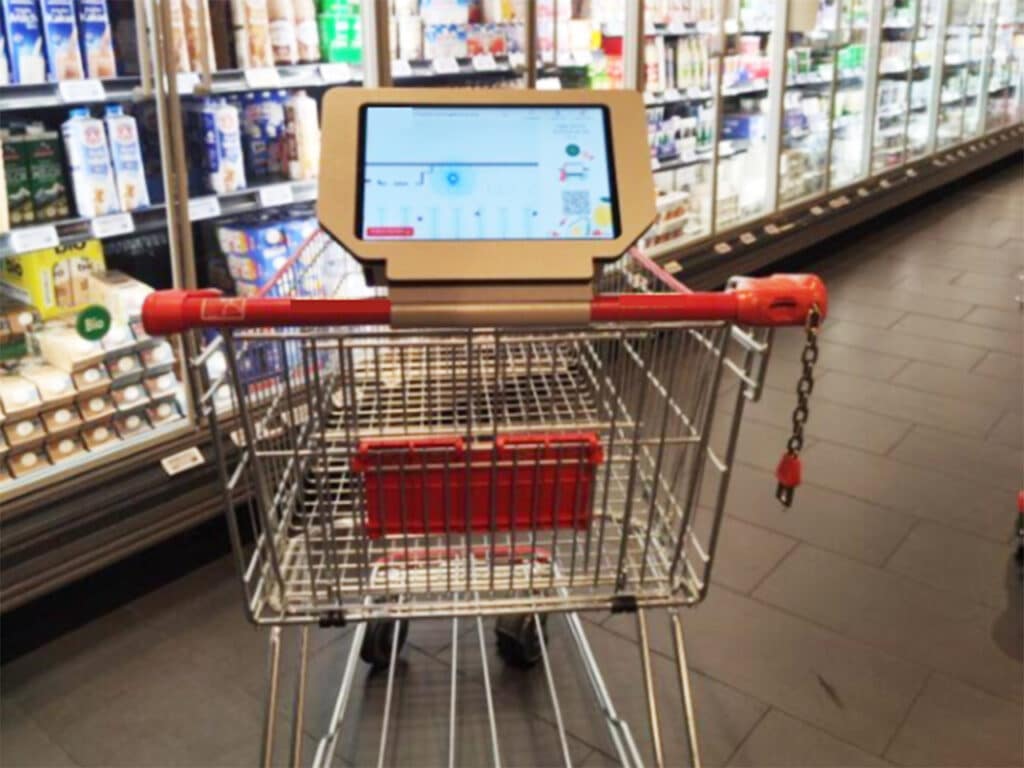
Shoppers who use trolleys embedded with digital screens to assist trips to the supermarket spend up to a third more than those who do not, according to new research by Bayes Business School at City St George’s, University of London.
AI-powered ‘smart trolleys’ fitted with tablets on their handlebars are currently being trialled in major UK supermarket chains, having been introduced more widely across Europe. Devices allow shoppers to digitalise their shopping lists, receive personalised recommendations and in-store navigation, and make checkout-free payments.
The research captured 12,418 shopping sessions across a month in a well-known German supermarket chain, including 9,422 using smart trolleys.
Among the findings:
- Shoppers engaging with smart shopping carts spent 32% more on average than those that didn’t, with particularly large differences observed on afternoons and at weekends.
- Smart shoppers also bought 25% more items than non-users, with more purchased in afternoons and evenings.
- Smart shoppers spent 23% more time on their shopping experiences, with longest durations spent in the evening.
“Retailers are increasingly using technology to enhance the shopping experience for consumers, and our findings suggest there may be significant revenue gains from doing so effectively. As well as guiding customers towards special offers and new products, digitalisation induces increased engagement and additional advertising platforms,” says lead author Dr Sabrina Gottschalk, a Lecturer in Marketing at Bayes.
“Although technology should in theory improve shopping experiences, consumers should be wary of relying solely on devices and remain conscious of how digital prompts and recommendations shape their purchase decisions.”
Clear spikes in spending and consumption
Study co-author and Senior Lecturer in Marketing, Dr Yusuf Oc, says the research shows clear spikes in spending and consumption for those deciding to use in-store digital assistance, suggesting that retailers should offer this technology and entice customers to use it – perhaps with a promise of loyalty points or prizes.
“The increase in afternoon and weekend activity from our findings should prompt supermarkets to promote higher-end items at these times to cash in on profligate customers, with offers on new items reserved for evening shoppers,” he notes.
“However, figures also suggest that over-reliance on smart trolleys in a single session can actually distract customers and diminish returns, leading to lower spending and basket sizes.”
You can find out more about the research, titled ‘Customer responses to smart shopping carts in supermarkets’ in the Journal of Business Research. Read it here.