Pre-conference masterclass discusses taking African brands to the world
Participants challenged to identify, articulate and commercialise the cultural assets that make their brand ready for a global audience.
FOOD INFLATION
By our African Marketing Confederation News Team | 2024
Items such as meat, bread, eggs, vegetables, cooking oil and powdered milk now taxed at 5%, rather the standard 14%.
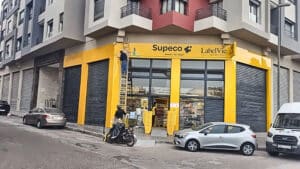
In good news for Angola’s consumers, grocery stores and supermarkets, the country’s government has implemented a cut in VAT on basic foods. The reduction – from 14% to 5% – became effective on Sunday (28 January).
As in most, if not all, African countries, Angolan consumers have been struggling to afford the skyrocketing cost of goods and have been cutting back on purchases as their income fails to keep pace with inflation.
According to the website Trading Economics.com, the cost of food in Angola increased by 19.5% percent in November 2023, over the same month in the previous year. “Food inflation in Angola is expected to be 20% by the end of this quarter, according to Trading Economics global macro models and analysts’ expectations,” the website states.
The cuts affect a range of product categories. Among them are meat, frozen and dried fish, eggs, edible vegetables, beans, fruit, tea, cereals, maize and wheat flour, cooking oil, sugar, bread, pastries and powdered milk. The measure is also aimed at agricultural inputs.
Photo credit: Hansueli Krapf via Wikimedia Commons
VAT cuts passed on to consumers
“According to local media, consumers have struggled to ascertain whether the fall in the price of food has happened because the festive season has ended, or due to VAT cuts. Nonetheless, the price cuts have been passed onto consumers and are visible in the market,” the London-based emerging markets consultancy, Trendtype comments.
It adds that a survey undertaken by the newspaper Jornal de Angola in mid-January found that the Alimenta Angola and Fresmart supermarket chains in Luanda have the lowest prices for the basic basket of 16 essential products. The highest prices were at the Casa dos Frescos chain.
The country’s Minister of State for Economic Coordination, José de Lima Massano, announced in July last year that VAT would be reduced on certain items due to inflation.
VAT was implemented in Angola on 1 July 2019, with an initial rate of 14%.

Participants challenged to identify, articulate and commercialise the cultural assets that make their brand ready for a global audience.

Second outlet planned for Nairobi before year end, with Nigeria, South Africa and Morocco said to be future target markets.

Online search behaviour has changed significantly with the rise of AI. How can African brands adapt to this new marketing landscape?

Researchers propose a framework for packaging that senses, learns and acts – making packaging an active, AI-powered tool against food waste.

Country needs marketers to build recognition and consumer trust around Malawian products and national brand, says Deputy Minister.

Fashion brand suspends giant lingerie high above the city’s streets, using shadows to create a moving billboard for pedestrians and motorists.

Researchers describe AI influencers as having a ‘dual identity’. Consumers evaluate both ‘person’ and ‘technology’ identities at once.

Reputation and trust, once modest influences on hotel choice, have become some of the strongest predictors of patronage, study finds.

South African brands are increasingly setting the global benchmark for customer loyalty strategies, organisers say.

Global influences among younger consumers are still present, but they are being filtered through a distinctly Zambian lens.

Researchers find that lack of perceived ‘genuine care’ is the mechanism connecting AI involvement to lower trust ratings.