Pre-conference masterclass discusses taking African brands to the world
Participants challenged to identify, articulate and commercialise the cultural assets that make their brand ready for a global audience.
BUSINESS STRATEGY
By our African Marketing Confederation News Team | 2025
Coopérative U plans at least 10 stores in the country over the next five year, in partnership with property developer Groupe Duval.
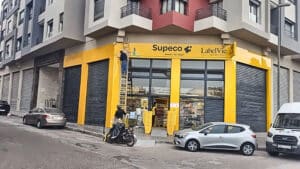
The French supermarket group Coopérative U – which operates supermarket and hypermarket brands such as Hyper U, Super U and U Express – has announced plans to open a minimum of 10 stores across Rwanda over the next five years.
A Super U outlet in Mauritius. Photo: Karsten Ratzke via Wikimedia Commons
It will do so through a strategic partnership with Groupe Duval, a French-based property development company which is developing the new Inzovu Mall in Kigali, Rwanda’s largest city.
Inzovu Mall is expected to be the city’s biggest shopping centre and will comprise a retail and leisure hub, a four-star hotel, offices and a business centre.
Coopérative U’s first outlet in Rwanda will be a U Express store, scheduled to open at the mall in early 2026.
Spar brand has recently entered Rwanda
“This move comes months after Spar entered Rwanda in April 2025 through a partnership with local chain Sawa Citi, which is rebranding all its stores under the Spar name, beginning with a location in Kigali’s Nyarutarama suburb,” reports the publication Food Business Africa.
“For Coopérative U, Rwanda will become its 11th market on the African continent, adding to its existing presence in francophone West and Central Africa, as well as in Mauritius, Morocco and Madagascar.
“At present, Kigali’s supermarket landscape is dominated by local and regional operators, including Simba Supermarket with 13 branches, Sawa Citi which is shifting to the Spar format, the centrally located 2000 Supermarket, and Sharma Supermarket, which caters to customers seeking imported specialty goods.”
Louis-Victor Duval, CEO of Groupe Duval, says in a statement posted on the company website: “Through this partnership and the upcoming launch of the U brand in Rwanda, we want to give customers easier access to quality products, support the upskilling of local talent, and actively contribute to the country’s growth momentum.”

Participants challenged to identify, articulate and commercialise the cultural assets that make their brand ready for a global audience.

Second outlet planned for Nairobi before year end, with Nigeria, South Africa and Morocco said to be future target markets.

Online search behaviour has changed significantly with the rise of AI. How can African brands adapt to this new marketing landscape?

Researchers propose a framework for packaging that senses, learns and acts – making packaging an active, AI-powered tool against food waste.

Country needs marketers to build recognition and consumer trust around Malawian products and national brand, says Deputy Minister.

Fashion brand suspends giant lingerie high above the city’s streets, using shadows to create a moving billboard for pedestrians and motorists.

Researchers describe AI influencers as having a ‘dual identity’. Consumers evaluate both ‘person’ and ‘technology’ identities at once.

Reputation and trust, once modest influences on hotel choice, have become some of the strongest predictors of patronage, study finds.

South African brands are increasingly setting the global benchmark for customer loyalty strategies, organisers say.

Global influences among younger consumers are still present, but they are being filtered through a distinctly Zambian lens.

Researchers find that lack of perceived ‘genuine care’ is the mechanism connecting AI involvement to lower trust ratings.