Pre-conference masterclass discusses taking African brands to the world
Participants challenged to identify, articulate and commercialise the cultural assets that make their brand ready for a global audience.
BUSINESS STRATEGY
By our African Marketing Confederation News Team | 2026
Group aims to become Africa’s leading grocery retailer within four years, according to its Carrefour 2030 blueprint.
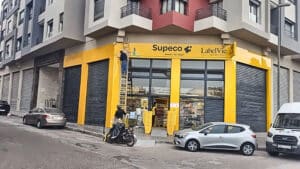
French-based supermarket group Carrefour will open its first supermarket in Guinea in mid-April 2026. It will do so in partnership with Imperial Group, a local supermarket chain that currently operates six supermarkets in Conakry and is already a major importer of French premium FMCG brands.
This is according to a report published by Trendtype, the emerging markets consultancy, which adds that all of Imperial Group’s stores will be rebranded to Carrefour.
Photo: Ecofin Agency
The only other international supermarket chain in Guinea is Cooperative U, which has three stores in Guinea in partnership with local entrepreneur Bassam Merhi.
Carrefour aims to become Africa’s leading grocery retailer within four years, according to its recently published Carrefour 2030 strategy.
The company is targeting operations in 22 African countries, part of 45 markets identified globally for expansion, as it seeks to boost growth and improve profitability.
Ethiopia and Ghana already in the Carrefour fold
In January 2026, Carrefour announced a franchise and supply agreement in Ethiopia with Queens Supermarket PLC, a subsidiary of local conglomerate Midroc Investment Group. The deal is expected to see 13 existing supermarkets rebranded under the Carrefour name in 2026, with 17 additional stores to open by 2028.
In December 2025, Carrefour signed an agreement with Brands for All to introduce its brands, retail expertise and private-label products in Ghana. The partnership will allow it to take over and rebrand seven stores currently operated by South Africa’s Shoprite by next April.
Other countries where Carrefour is active include Kenya, Uganda Democratic Republic of Congo, Gabon, Cameroon, Senegal, Algeria, Morocco and Egypt. The group currently operates nearly 700 stores across Africa.
Comments Trendtype: “The vast majority of those stores are in three countries in North Africa: Morocco, Egypt and Tunisia. Carrefour’s store network in the rest of Africa is relatively small, which is partly reflective also of the much smaller size of the modern trade in sub-Saharan Africa.”

Participants challenged to identify, articulate and commercialise the cultural assets that make their brand ready for a global audience.

Second outlet planned for Nairobi before year end, with Nigeria, South Africa and Morocco said to be future target markets.

Online search behaviour has changed significantly with the rise of AI. How can African brands adapt to this new marketing landscape?

Researchers propose a framework for packaging that senses, learns and acts – making packaging an active, AI-powered tool against food waste.

Country needs marketers to build recognition and consumer trust around Malawian products and national brand, says Deputy Minister.

Fashion brand suspends giant lingerie high above the city’s streets, using shadows to create a moving billboard for pedestrians and motorists.

Researchers describe AI influencers as having a ‘dual identity’. Consumers evaluate both ‘person’ and ‘technology’ identities at once.

Reputation and trust, once modest influences on hotel choice, have become some of the strongest predictors of patronage, study finds.

South African brands are increasingly setting the global benchmark for customer loyalty strategies, organisers say.

Global influences among younger consumers are still present, but they are being filtered through a distinctly Zambian lens.

Researchers find that lack of perceived ‘genuine care’ is the mechanism connecting AI involvement to lower trust ratings.