
Airline body urges African governments to act on opening market access
‘Strategies don’t move people. Now it is time to make the difficult decisions and execute them,’ senior executive stresses.
A.M.C. MEMBER NEWS
By our News Team | 2023
Second edition of the study surveyed over 5,000 consumer and business customers, with banks urged to act on the results.
The Chartered Institute of Marketing, Ghana (CIMG) has launched the Ghana Customer Satisfaction Index Report (GH-CSI) for 2022. The launch event at the Coconut Grove Hotel in Accra had a hybrid format, with a live TV broadcast and a substantial online presence on Facebook Live.
The study established an overall CIMG-CSI Performance Index of 98% for Service Quality, for which five banks crossed the threshold. Nineteen banks performed outstandingly, attaining 5-Star categorisation, while three banks earned 4-Star status.
From left: Dr Daniel Kasser Tee, National President of CIMG; Mr John Awuah, CEO of the Ghana Association of Banks; Mr Adam Sulley, Consulting Director of Education at CIMG; Dr Ireneus Gundona, CEO of Consumer Insights Consult Ltd. Photo credit: CIMG
Centred on the banking sector, the research assessed customer sentiments regarding Service Quality, Customer Satisfaction, and Customer Loyalty in both consumer and business banking.
According to the CIMG, research focused on the banking sector due to its strong regulation and regulatory oversight, ensuring minimum quality standards. Over 3,000 retail consumers at the branches of Ghana’s 22 universal banks in Accra, as well as more than 2,000 business banking customers, were surveyed.
In his welcome address, the National President of CIMG, Dr Daniel Kasser Tee, commended the banks for navigating a tough financial year.
“The effects of the Domestic Debt Exchange Programme (DDEP) on the financial performance of banks for the full year 2022 and the first quarter of 2023, for some, was huge and devastating. Thank God, they have survived it and returned to profitability,” he said.
Dr Tee announced the inclusion of Business Banking, stating that: “We have been able to expand the study a notch further to cover Business Banking as well, unlike the maiden report that covered only Consumer Banking. By this, we collected and analysed separate data for Consumer banking and Business banking.”
Put the results to good and prudent use
He added: “Consumers of this report, particularly the banks, must learn how to put the results to good and prudent use. They should juxtapose their performance in each area to the customer’s indication of how important that particular dimension is to them.
“High service quality promotes customer satisfaction, which in turn aids in shaping customer behavioural intentions by way of loyalty, and guarantees positive financial consequences on both the income statements and balance sheets of organisations.”
The chairman for the launch was the Chief Executive Officer at the Ghana Association of Banks, Mr John Awuah, who expressed delight with the outcome of the study.
“This exercise, you all agree with me, is a very important one and, personally, I am excited that we have these performance benchmarks, particularly on customer satisfaction. Banks can benchmark themselves against each other and identify areas where service standards need improvement.”
He advised the banks to embrace the report as an accurate indication of customer sentiments.
“This is not a CIMG report. This was done in collaboration with technical support from the association and also from independent customers of the banks who have no interest in marking ‘bank A’ up or ‘bank B’ down. So, we take the results as a true reflection of the image that our customers perceive of our banks and our services,” Mr Awuah stated.
“As an association we will further dissect the results, providing our members with a comprehensive snapshot. We call on them to take these performance outcomes very seriously and use [the report] to drive their service standards going forward.”
Future CIMG surveys will expand to cover a broader range of industries, providing a comprehensive view of the average Ghanaian’s sentiments towards everyday products and services.

‘Strategies don’t move people. Now it is time to make the difficult decisions and execute them,’ senior executive stresses.

UTB says its ambition is to turn the visibility into interest, bookings and more visitors choosing to explore Uganda.

Short ads shown on TV increased website visits within five minutes of airing by 10-40% compared with longer advertisements.
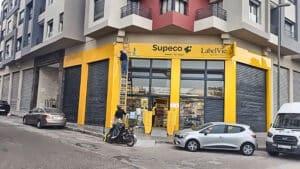
Supeco’s rapid expansion shows how the discount model is becoming a bigger part of grocery retail in the North African country.

Consumers reward visible eco-friendly additions such as reusable bottles, but give little credit to businesses that reduce or remove products.

Nestlé believes Ghana will continue to play a leading role in the future of Central and West Africa.

Ethiopia’s marketers gather to celebrate hosting next year’s conference – but with an eye on the hard work ahead.

Tech is creating more ways for audiences to connect, but lasting value will come from understanding the people behind those connections.

The new production line at the historic Maydon Wharf facility in Durban will address growing international demand.

Tanzania, Kenya, Zimbabwe, Ethiopia and South Africa all feature in the African meetings, incentives, conferences and exhibitions awards.

Much of the broader conversation around AI in market research assumes conditions that do not consistently exist across many African markets, writes Soyinka Witness.