Holistic wellbeing and authenticity among the big consumer drivers
‘Top Global Consumer Trends’ report for 2026 identifies four trends that highlight crucial shifts in consumer behaviour.
CONSUMER INSIGHTS
By our African Marketing Confederation News Team | 2025
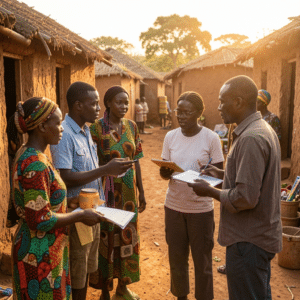
African consumers are facing rapid change and many social stressors, resulting in significant changes to buying behaviours.
For years, local marketing experts have been emphasising that Africa’s 54 countries are each unique in terms of culture and consumers. In 2025, those distinctions remain crucially important.
Photo: Sir Demo via Wikimedia Commons
The 2025 Africa Life report by global market research company Kantar continues to add layers of complexity and understanding to the unfolding appreciation for Africa’s nuanced consumer experience.
In 2017, Kantar began delving into the mind of the African consumer. Over the years, various markets have been included in the Africa Life studies and, in 2025, the spotlight fell on Côte d’Ivoire, Kenya, Nigeria, Senegal and South Africa.
The latest research has highlighted how consumers in these five markets are all battling with the cost of living, high unemployment and, notably in the case of South Africa, the threat of crime and violence (cited by 56% of respondents).
High levels of stress are evident in Kenya, where 62% cited government corruption, and in Nigeria – the most stressed country surveyed – where economic woes have been linked to rampant inflation.
Across a basket of 42 essentials – including edible oil, pasta and soap – Kantar pointed to a 54% hike in prices for Nigerians, compared to larger and less dramatic increases for FMCG basket comparisons with Kenya (85 items and a 6% rise) and South Africa (116 items at 8% inflation).
Pressure on Nigerian consumers is extreme
The pressure on Nigerian consumers currently is extreme, said Daniel Oseman, MD: East Africa, and the first Kantar expert to address the webinar launching the 2025 report.
“Thirty-five percent of [Nigerian] respondents are not managing to pay their household expenses and 17% of people in this affluent and connected society don’t know where their next meal is coming from,” he said.
Not surprisingly, this macro-economic strain has been affecting consumer buying behaviours.
In Kenya, for instance, consumers are choosing to buy cheaper soap cut from a large bar in store, rather than buying packaged brands. Kenyans and South Africans are spending less on alcohol and are also looking for products that can be used across various applications – such as a dishwashing product that can be used for clothes washing.
Price sensitivity is high across the board; reflecting how some consumers use the internet and online sources to check prices and search for better deals before buying. This is reflective of the utilitarian use of the internet by many African consumers.
You can read more about the 2025 Africa Life report – and much more – in the latest Strategic Marketing for Africa – the voice of African marketing and the official publication of the African Marketing Confederation (AMC). Read Issue 3 2025 online here.
A Print Edition is also available.

‘Top Global Consumer Trends’ report for 2026 identifies four trends that highlight crucial shifts in consumer behaviour.

The forum is a premier event that brings together marketing professionals, thought leaders and innovators from across the globe.

If you want to win on the continent as a marketer, don’t just scale. Localise, adapt your strategies and stay close to the consumer.

Moving Walls and Publicis West Africa partner to offer a new service that delivers real-time OOH analytics for marketers and agencies.

While factual reviews benefit readers, writing these reviews can ultimately hinder the authors’ referral and repurchase behaviours.

The latest issue of Strategic Marketing for Africa, the magazine for deep-thinking African marketing professionals, is now available.

Ronnie becomes Chair at a time the MMA is rebranding and showing a stronger commitment to the sub-Saharan Africa region.

The first Pick n Pay Go store location is Shell Village service station in Gaborone, with more sites to be rolled out in coming months.
Beyond Chance: Maximize Your Winnings with the Plinko game pakistan – 99% RTP & Up to 1000x Multipliers Await. Understanding the Core Mechanics of Plinko

Cost-per-wear reframes sustainability as smart spending, while supposedly cheap fast fashion suddenly appears more expensive, study suggests.

Partnership marks a strategic communications shift for the bank, as brands can no longer ‘just broadcast and hope to make an impact’.
Dr. Kin Kariisa is an extraordinary force at the helm of Next Media Services, a conglomerate encompassing NBS TV, Nile Post, Sanyuka TV, Next Radio, Salam TV, Next Communication, Next Productions, and an array of other influential enterprises. His dynamic role as Chief Executive Officer exemplifies his unwavering commitment to shaping media, business, and community landscapes.
With an esteemed academic journey, Dr. Kariisa’s accolades include an Honorary PhD in exemplary community service from the United Graduate College inTexas, an MBA from United States International University in Nairobi, Kenya, a Master’s degree in Computer Engineering from Huazong University in China, and a Bachelor’s degree in Statistics from Makerere University.
Dr. Kariisa pursued PhD research in Computer Security and Identity Management at Security of Systems Group, Radboud University in Nijmegen, Netherlands. As a dynamic educator, he has shared his expertise as a lecturer of e-Government and Information Security at both Makerere University and Radboud University.
Dr Kin did his PhD research in Computer Security and Identity Management at Security of Systems Group, Radbond University in Nigmegen, Netherlands. He previously served as a lecturer of e-Government and Information Security at Makerere University in Kampala, Uganda and Radbond University in Netherlands.
Dr Kin did his postgraduate courses in Strategic Business Management, Strategic Leadership Communication and Strategies for Leading Successful Change Initiatives at Harvard University, Boston USA.