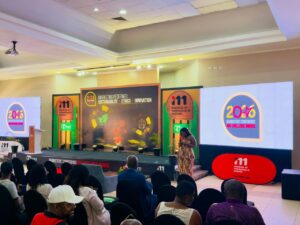
Holistic wellbeing and authenticity among the big consumer drivers
‘Top Global Consumer Trends’ report for 2026 identifies four trends that highlight crucial shifts in consumer behaviour.
BRAND DEFENDERS
By our African Marketing Confederation News Team | 2025
Newly published research explores what drives different types of people to defend brands, and how companies can appeal to each type.
‘Brand defenders’ – customers who stand up for a brand which is facing a barrage of criticism from other consumers – are a potentially valuable resource for companies, researchers in the US and Switzerland point out.
Wayne Hoyer, Professor of Marketing from the University of Texas at Austin, led a recent study and notes that in today’s world everything is a two-way interaction, with consumers getting actively involved in the process.
Voluntary ‘brand defenders’ may shield brands from online attacks. Photo: AI image, Freepik
“[Brand defenders] make videos and they stand up for the brands. They can be very valuable in offsetting negative communication,” Hoyer says.
In newly published research, he explores what drives different types of defenders and how companies can appeal to each type. The work is published in the peer-reviewed Journal of Interactive Marketing.
Together with a team of marketing researchers from the University of Bern in Switzerland, Hoyer first looked at how often consumers stand up for brands online.
The researchers reviewed three months’ worth of comments on the Facebook pages of eight US brands. On average, one in every 20 comments was a defence against criticism, ranging from 1% of total comments for AT&T (a telecommunications business) to 10% for Tesla (electric vehicles and energy products).
Love, justice and ego
The team contacted 10 of the commenters for interviews, then followed up with an online survey of 570 people who had refuted brand critics within the past six months. Using cluster analysis, they broke the defenders into three groups, each with a distinct set of motivations.
‘Brand promoters’ are the customers who have the strongest satisfaction with the brand and attachment to it. They feel an altruistic desire to give something back. “People feel emotionally connected,” Hoyer explains. “So, when the brand is being attacked, they’re being attacked as well.”
Companies can encourage promoters by acknowledging them, he says. “People like to be told: ‘We appreciate you’. It’s all about building strong relationships. They love the brand and they love to be recognised by the brand.”
‘Justice promoters’ on the other hand, are not emotionally attached. Its main motivator is a feeling that the brand is being wrongly condemned.
“They just believe in fair play,” Hoyer notes. “They simply want to restore equity – not because they love the brand, but because they think it’s unfair [that] it’s been attacked.”
Because they feel less strongly about the brand, he adds, it’s tougher to market to them and you must appeal to a sense of fairness.
‘Self-promoters’ are defenders who are motivated as much by ego as by attachment. By speaking up, they present a positive online image. They may also hope to get rewards from the brand.
“Those are people that like to get attention on social media,” Hoyer observes. “They figure if they stand up and say something, they’ll get a lot of likes. If they see a brand being attacked and defend it, they can get followers.
“It’s not about the brand. It’s about ‘me’ in a general sense, and wanting attention online and promoting myself.”
Mobilising the three ‘defender’ groups
When it comes to mobilising all three types, the researchers suggest, it can be effective to send private thank-you messages or to acknowledge their comments with likes. Customers could also be treated to rewards such as raising their level in an online game.
What companies should avoid, though, is being too obvious about their encouragement.
“Publicly praising brand defenders should be approached with caution,” the researchers write. “It may give the impression that they are company representatives, potentially harming credibility.”
You can find out more about the study here.

‘Top Global Consumer Trends’ report for 2026 identifies four trends that highlight crucial shifts in consumer behaviour.

The forum is a premier event that brings together marketing professionals, thought leaders and innovators from across the globe.

If you want to win on the continent as a marketer, don’t just scale. Localise, adapt your strategies and stay close to the consumer.

Moving Walls and Publicis West Africa partner to offer a new service that delivers real-time OOH analytics for marketers and agencies.

While factual reviews benefit readers, writing these reviews can ultimately hinder the authors’ referral and repurchase behaviours.

The latest issue of Strategic Marketing for Africa, the magazine for deep-thinking African marketing professionals, is now available.

Ronnie becomes Chair at a time the MMA is rebranding and showing a stronger commitment to the sub-Saharan Africa region.

The first Pick n Pay Go store location is Shell Village service station in Gaborone, with more sites to be rolled out in coming months.
Beyond Chance: Maximize Your Winnings with the Plinko game pakistan – 99% RTP & Up to 1000x Multipliers Await. Understanding the Core Mechanics of Plinko

Cost-per-wear reframes sustainability as smart spending, while supposedly cheap fast fashion suddenly appears more expensive, study suggests.

Partnership marks a strategic communications shift for the bank, as brands can no longer ‘just broadcast and hope to make an impact’.
Dr. Kin Kariisa is an extraordinary force at the helm of Next Media Services, a conglomerate encompassing NBS TV, Nile Post, Sanyuka TV, Next Radio, Salam TV, Next Communication, Next Productions, and an array of other influential enterprises. His dynamic role as Chief Executive Officer exemplifies his unwavering commitment to shaping media, business, and community landscapes.
With an esteemed academic journey, Dr. Kariisa’s accolades include an Honorary PhD in exemplary community service from the United Graduate College inTexas, an MBA from United States International University in Nairobi, Kenya, a Master’s degree in Computer Engineering from Huazong University in China, and a Bachelor’s degree in Statistics from Makerere University.
Dr. Kariisa pursued PhD research in Computer Security and Identity Management at Security of Systems Group, Radboud University in Nijmegen, Netherlands. As a dynamic educator, he has shared his expertise as a lecturer of e-Government and Information Security at both Makerere University and Radboud University.
Dr Kin did his PhD research in Computer Security and Identity Management at Security of Systems Group, Radbond University in Nigmegen, Netherlands. He previously served as a lecturer of e-Government and Information Security at Makerere University in Kampala, Uganda and Radbond University in Netherlands.
Dr Kin did his postgraduate courses in Strategic Business Management, Strategic Leadership Communication and Strategies for Leading Successful Change Initiatives at Harvard University, Boston USA.