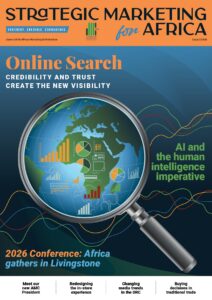
Search is fragmenting – credibility and trust create the new visibility
Online search behaviour has changed significantly with the rise of AI. How can African brands adapt to this new marketing landscape?
BRANDING
By our African Marketing Confederation News Team | 2024
When a brand starts to accept and even adopt a nickname given by consumers, it makes the brand seem less powerful, researchers find.
Can businesses benefit from adopting popular nicknames into their branding strategy? The answer, in most instances, is ‘no’.
Photo: Mike Bird from Pexels
Researchers from three universities in North America – Western University, Stockton University, and University of Massachusetts Amherst – have published a new study that examines whether firms benefit from adopting popular nicknames in their branding efforts.
The study, published in the American Marketing Association’s peer-reviewed Journal of Marketing, is titled ‘BMW is Powerful, Beemer is Not: Nickname Branding Impairs Brand Performance’, and is authored by Zhe Zhang, Ning Ye, and Matthew Thomson.
Many brands have popular nicknames that have become a part of daily conversations. BMW is often referred to as ‘Beemer’, for example. Or Starbucks as ‘Starbies’.
Can companies benefit from adopting such nicknames in their branding? The study finds it’s detrimental to brand performance. This is because brand nicknames are usually given by consumers.
Zhang explains: “Accepting a consumer-generated nickname suggests that a brand implicitly admits that consumers are ‘in charge’ and that they publicly accept and promote an altered identity bestowed by consumers. When a brand starts to accept and even adopt a nickname given by consumers, it makes the brand seem less powerful.”
Nickname use by customers versus nickname use by marketers
Many brands closely follow consumers’ language use, especially on social media. However, the purpose of this monitoring should be to generate insights, not to mechanically repeat what consumers say.
“Marketers should recognise the differences in nickname use by consumers versus by marketers,” says Thomson. “While one may want to avoid adopting a nickname for marketing, nickname use within the consumer community should not be discouraged.”
Lessons for chief marketing officers
You can find out more about the study here.

Online search behaviour has changed significantly with the rise of AI. How can African brands adapt to this new marketing landscape?

Researchers propose a framework for packaging that senses, learns and acts – making packaging an active, AI-powered tool against food waste.

Country needs marketers to build recognition and consumer trust around Malawian products and national brand, says Deputy Minister.

Fashion brand suspends giant lingerie high above the city’s streets, using shadows to create a moving billboard for pedestrians and motorists.

Researchers describe AI influencers as having a ‘dual identity’. Consumers evaluate both ‘person’ and ‘technology’ identities at once.

Reputation and trust, once modest influences on hotel choice, have become some of the strongest predictors of patronage, study finds.

South African brands are increasingly setting the global benchmark for customer loyalty strategies, organisers say.

Global influences among younger consumers are still present, but they are being filtered through a distinctly Zambian lens.

Researchers find that lack of perceived ‘genuine care’ is the mechanism connecting AI involvement to lower trust ratings.

Explore the 2026 AMC Conference speaker line-up. Top African marketing voices gather in Zambia to tackle AI, AfCFTA, and brand power. Register today.

New industry currency will bring South African television and online video audiences together in a single measurement system.