We know AI influencers aren’t real – so why do we trust them?
Researchers describe AI influencers as having a ‘dual identity’. Consumers evaluate both ‘person’ and ‘technology’ identities at once.
MEDIA REPORTING
By our News Team | 2022
Study says the international media narrative around Africa sticks to old stereotypes, with economic ‘good news’ largely ignored.
Africa’s compelling business stories and successes are continuing to be under-reported in the international media, while stereotypes around conflict, governance, corruption and poverty dominate the narrative.
This is according to The Business in Africa Narrative Report released by Africa No Filter and AKAS. The former is a privately funded organisation that works to shift stereotypical and harmful narratives about the continent, while the latter is an international audience-strategy consultancy.
The report says the keywords, stories, frames, and narratives associated with business on the continent are dangerously distorted. There is an overemphasis on the role of governments, foreign powers and larger African states – alongside an underappreciation of the role of young people, women, entrepreneurs, creative businesses, smaller successful African states, and Africa’s future potential.
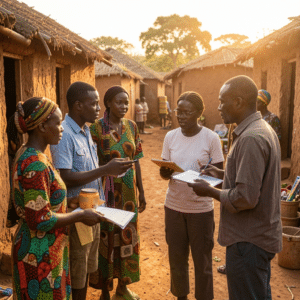
Photo by Nappy from Pexels
“We wanted to understand why Africa is seen as a high-risk business destination and why the cost of money is at a premium,” explains Moky Makura, Executive Director at Africa No Filter.
“The report gives us an insight into why. It shows that business opportunities on the continent are both under-represented and misrepresented, and now that we know this, we can work on educating the media and changing the narrative around business in Africa.”
Says Richard Addy of AKAS: “This ground-breaking report offers a detailed data analysis on the narrative around business in Africa. The rigorous research is important because narratives, frames and stories are the lenses through which we perceive and experience Africa. They inform beliefs, behaviour and ultimately dictate policy.”
Distortions that played out in media stories
In addition to the dominance of foreign powers in business stories featured in international media, the report highlighted a number of distortions played out in stories and the under-representation of businesses across the continent, including:
The report also notes that academic researchers have consistently shown a correlation between media representations and investment levels. One study of the stock market in the US showed that media visibility led to more investment than under-investment and influenced investor trading behaviour. In other words, how the media covers business matters.

Researchers describe AI influencers as having a ‘dual identity’. Consumers evaluate both ‘person’ and ‘technology’ identities at once.

Reputation and trust, once modest influences on hotel choice, have become some of the strongest predictors of patronage, study finds.

South African brands are increasingly setting the global benchmark for customer loyalty strategies, organisers say.

Global influences among younger consumers are still present, but they are being filtered through a distinctly Zambian lens.

Researchers find that lack of perceived ‘genuine care’ is the mechanism connecting AI involvement to lower trust ratings.

Explore the 2026 AMC Conference speaker line-up. Top African marketing voices gather in Zambia to tackle AI, AfCFTA, and brand power. Register today.

New industry currency will bring South African television and online video audiences together in a single measurement system.

Making people feel that an event space reflects their values leads to long-term loyalty and spending. FOMO also plays its part.

Norms may change, but right now it’s better to err on the side of caution when using AI in advertisements, study finds.

GeoPoll insights report from Kenya, Nigeria and South Africa finds that quality remains the key purchase driver in FMCG.

As the country celebrates Heritage Month, Takealot embarks on a campaign to speak to consumers in all 12 official languages.