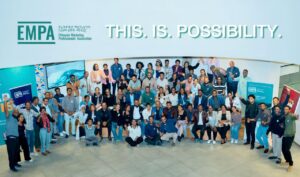
Pre-conference masterclass discusses taking African brands to the world
Participants challenged to identify, articulate and commercialise the cultural assets that make their brand ready for a global audience.
A.M.C. MEMBER NEWS
By our African Marketing Confederation News Team | 2025
The Marketers Association of Zimbabwe (MAZ) is set to host its highly anticipated 2025 Business Review Conference on Thursday, 20 February at the prestigious Hyatt Regency, Harare (formerly The Meikles).
This event will bring together industry leaders, marketing professionals, and decision-makers for an in-depth discussion on the trends and challenges that will shape Zimbabwe’s business environment in 2025.
Photo by Katrien Grevendonck from Pexels
Under the theme ‘Shifting Paradigms in 2025’, the conference will explore key economic, media, advertising, and marketing landscapes, providing valuable insights for businesses looking to adapt and thrive in the coming year.
The 2025 Business Review Conference will feature a series of panel discussions on critical areas that are expected to shape the business world in 2025. It opens with an analysis of the 2025 Economic Outlook, where experts will analyse the expected economic conditions, key challenges, and emerging opportunities for businesses in Zimbabwe.
Examine how companies can respond
Following this, the 2025 Business Landscape and Marketing Responses session will examine how companies can respond to these economic shifts through innovative marketing strategies and business practices. These main sessions are designed to equip attendees with the knowledge they need to succeed in an evolving marketplace.
In addition to these major sessions, the conference will also feature specialised panel discussions on key industry topics – including the 2025 Media Landscape, 2025 Advertising Landscape, 2025 Marketing Landscape, and 2025 Events and Exhibitions Landscape.
Each panel will be led by experts in the respective fields, providing attendees with a deep understanding of how these sectors are expected to evolve in 2025. The insights shared during these sessions will help businesses develop strategies to navigate the shifting dynamics within the media, advertising, marketing, and events industries.
Among the presenters and panellists are economist Persistence Gwanyanya, CEO of Bullion Group International and a member of the RBZ Monetary Policy Committee; Rohit Alagh, Director, Sales & Strategy for APAC, Middle East & Africa at BeatRoute; and Charity Njanji, Team Lead Consultant for Regalite Communications.
The 2025 Business Review Conference is also being held in Bulawayo. This takes place on 28 February at the Bulawayo Rainbow Hotel.

Participants challenged to identify, articulate and commercialise the cultural assets that make their brand ready for a global audience.

Second outlet planned for Nairobi before year end, with Nigeria, South Africa and Morocco said to be future target markets.

Online search behaviour has changed significantly with the rise of AI. How can African brands adapt to this new marketing landscape?

Researchers propose a framework for packaging that senses, learns and acts – making packaging an active, AI-powered tool against food waste.

Country needs marketers to build recognition and consumer trust around Malawian products and national brand, says Deputy Minister.

Fashion brand suspends giant lingerie high above the city’s streets, using shadows to create a moving billboard for pedestrians and motorists.

Researchers describe AI influencers as having a ‘dual identity’. Consumers evaluate both ‘person’ and ‘technology’ identities at once.

Reputation and trust, once modest influences on hotel choice, have become some of the strongest predictors of patronage, study finds.

South African brands are increasingly setting the global benchmark for customer loyalty strategies, organisers say.

Global influences among younger consumers are still present, but they are being filtered through a distinctly Zambian lens.

Researchers find that lack of perceived ‘genuine care’ is the mechanism connecting AI involvement to lower trust ratings.