Analysing how impatience impacts consumer behaviour in an online world
Lessons from pizza delivery can be transferred to any business that sells products online and relies upon delivery channels.
RETAIL TECH
By our African Marketing Confederation News Team | 2026
Pilot testing taking place at a Cape Town store to evaluate customer acceptance and the overall customer journey.
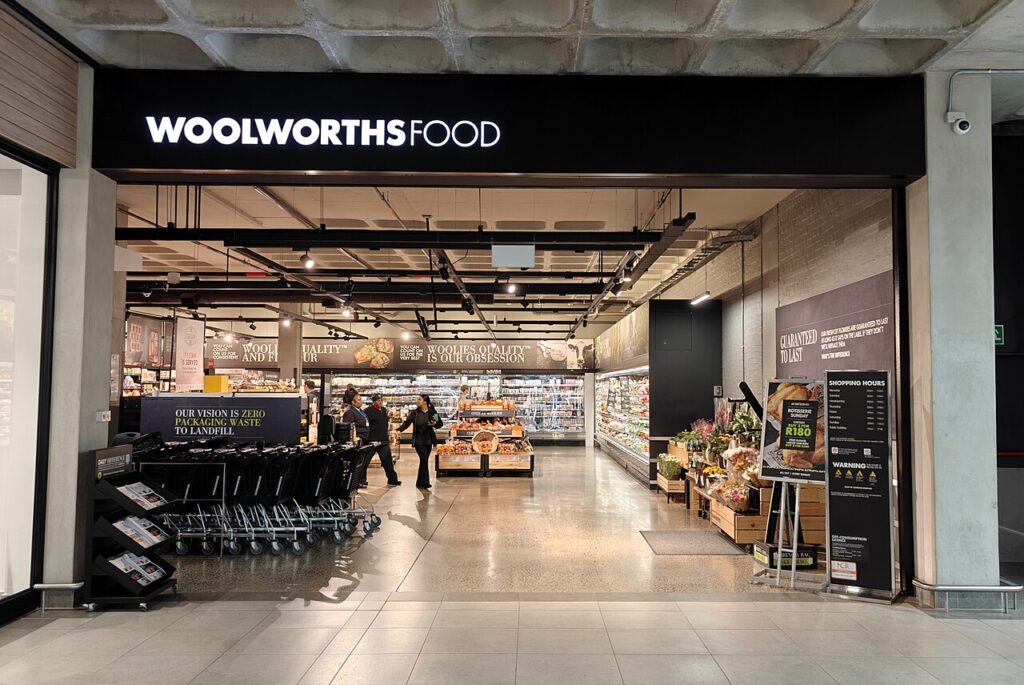
Woolworths South Africa has become the latest retail business in the country to trial a self-service checkout system to speed up the process for customers.
Photo: Husskeyy via Wikimedia Commons
According to various reports in the SA media, the upmarket supermarket/retailer is monitoring the results of a self-service Express Till at its Foreshore store in Cape Town.
“At present, this is a limited pilot involving one till in a single store. The objective is to evaluate the overall customer journey, including ease of use, speed of transaction and customer acceptance, before making any decisions about broader implementation,” a company spokesperson is quoted as saying in a report published by The Citizen newspaper.
“Insights from this pilot phase will help us determine how the solution performs operationally, and how it is experienced by both customers and staff.”
Self-checkout systems typically enable customers to scan items as they place them in their basket or trolley. Payment is processed digitally, either by using a card or a linked app.
Reducing checkout delays
Speed of checkout and eliminating long queues, especially at peak times, is the main customer benefit. Some businesses also it as a cost-cutting and staff-reducing exercise, although Woolworths South Africa has gone on record as saying that jobs are not at risk.
Comments the website SA People: “The move reflects growing consumer demand for speed and convenience. With rising pressure on household budgets and time constraints shaping shopping habits, retailers are increasingly investing in frictionless payment systems.
“Globally, supermarkets have adopted similar models to reduce congestion and improve in-store flow, and Woolworths appears to be aligning with that trend.
“While the pilot is still in its early stages, industry analysts suggest that successful implementation could influence how other South African retailers modernise their checkout processes. If expanded nationally, the system could redefine customer interaction at point-of-sale level.”
Other brands also trialling smart checkout technologies
Last year, the Checkers supermarket chain introduced smart shopping trolleys at a small number of selected stores.
Fast-food brands such as McDonald’s and KFC have also rolled out self-service kiosks which enable customers to place and pay for orders digitally.

Lessons from pizza delivery can be transferred to any business that sells products online and relies upon delivery channels.

The platform along the Lobito Corridor is expected to include warehouses, a fuel terminal, a mineral terminal and industrial areas.

Much of the broader conversation around AI in market research assumes conditions that do not consistently exist across many African markets, writes Soyinka Witness.

Consumers are asking AI which retailer offers the best deal, comparing products or researching brands before visiting a website or store.

Kenya Ports Authority is working to improve cargo flow and efficiency to support growing trade volumes at vital import-export gateway.

African consumers want ethical, responsible choices. Therefore, brand growth hinges on making sustainable choices affordable and relevant.

Examining the tech-hype trap and why human judgement, not technology, will pave the way to competitive advantage in Africa.

Strategic senior appointment comes at a time when the local advertising-intelligence landscape is entering a period of significant change.

Ghana has shifted decisively into consumer-led recovery, with Côte d’Ivoire and Cameroon following more gradually.

AMC President discusses the upcoming conference’s ‘full circle’ and the gathering’s role in navigating marketing’s paradigm shift.

Africa’s retail future may be led not by size, but by those who most effectively remove the friction between customer intent and transaction.