
Researchers examine why some AI ads fail while others succeed
Norms may change, but right now it’s better to err on the side of caution when using AI in advertisements, study finds.
AFRICAN ECONOMIES
By our African Marketing Confederation News Team | 2025
World Bank report paints positive picture, but emphasises that enhancing ports and related infrastructure could boost GDP by 4-5%.
Tunisia’s economy is projected to grow by 1.9% in 2025, up from 1.4% in 2024, supported by improved rainfall and gradual stabilisation across key sectors of the North African nation.
While manufacturing continues to face challenges, resilience in tourism and agriculture are contributing to the recovery, according to the World Bank’s latest economic update for Tunisia, titled ‘Better Connectivity to Grow’.
Growth is expected to stabilise at around 1.6% to 1.7% in 2026–2027, the World Bank predicts. It adds that, although global trade uncertainties and limited external financing could pose some challenges, stronger reform momentum within the country may help to improve Tunisia’s medium-term outlook.
Inflation has continued decelerating and is now nearing pre-pandemic averages. Food inflation stands at 7.3%, driven by seasonal and supply-side pressures. In response to the easing trend, the Central Bank of Tunisia recently reduced its key interest rate to 7.5%, marking its first rate cut in over two years.
Tunisia’s current account deficit narrowed to 1.7% of GDP in 2024, supported by improving terms of trade and resilient income from tourism, the World Bank states.
A scene in Tunis, the capital city of Tunisia. Photo: Chermiti Mohamed, Pexels
At the same time, recent increases in energy imports and a slowdown in export volumes widened the trade deficit in the first quarter of 2025, posing some challenges to the balance of trade. On the positive side, public spending was contained.
Logistics and supply chain
The report includes a special focus on Tunisia’s trade connectivity, highlighting the significant economic potential of improving the country’s port system. The World Bank believes that enhancing ports and related infrastructure connectivity could boost GDP by 4-5% within three to four years.
“Achieving the levels of port connectivity of regional peers through targeted infrastructure improvements could generate gains of 2.6-3.5% of GDP, while tackling institutional bottlenecks in customs and logistics could yield over one percent in additional gains,” the report states.
“Tunisia continues to show resilience amid a complex global and domestic environment,” says Alexandre Arrobbio, World Bank Country Manager for Tunisia. “Better connectivity, especially through improved port logistics, can be a powerful engine for job creation and economic growth.”.
In the longer term, positioning Tunisia as a trans-shipment hub could deliver even larger benefits of around 11-14% of GDP.
The report recommends a mix of infrastructure upgrades – such as new terminals, equipment modernisation and port access improvements – and institutional reforms including revised port tariffs, digital systems modernisation, and enhanced railway-port connectivity.

Norms may change, but right now it’s better to err on the side of caution when using AI in advertisements, study finds.

GeoPoll insights report from Kenya, Nigeria and South Africa finds that quality remains the key purchase driver in FMCG.
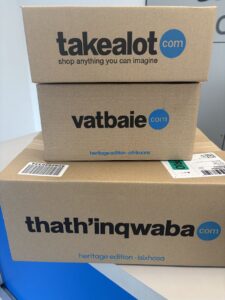
As the country celebrates Heritage Month, Takealot embarks on a campaign to speak to consumers in all 12 official languages.

She brings experience across creative strategy, digital transformation, media, content, influencer marketing and client leadership.
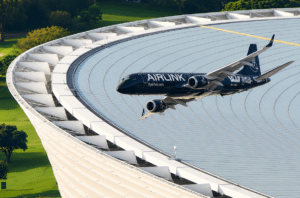
Airlink has been a centre of attention for the past week due to its spectacular flypast over a rugby stadium. What’s the marketing benefit?

Jane Gaty, who has extensive experience in the health care sector, joins as Head of Brand, Experience and Corporate Impact.

Two executives step into new leadership roles within Africa, while a third long-serving leader moves to a position with Kantar UK.
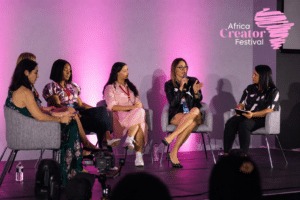
The continent’s creators are building communities, shaping culture and developing businesses of their own, organisers say.

Apart from being host to the upcoming annual AMC Conference, ZIM recently hosted its own conference and a graduation ceremony.

She brings an extensive background in Nigerian and regional spirits marketing to a wider African responsibility.

Albert De Andrade is named as Chief Creative Officer and Lerato Moleko is appointed Strategy Director.