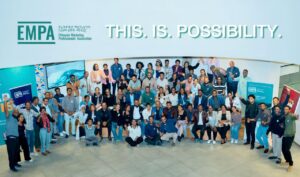
World Marketing Council takes its first steps on the global stage
First Vice President outlines vision to champion professional excellence, ethical practice and innovation in marketing worldwide.
EXECUTIVE APPOINTMENTS
By our News Team | 2023
Hein Schumacher is a former Heinz executive and currently CEO of a Dutch-based global dairy and nutrition business. He takes over in July.
Unilever, the global FMCG giant that is home to more than 400 of the world’s best-selling brands, has confirmed the appointment of its new CEO.
He is Hein Schumacher, 51, a former Heinz and Unilever executive who is currently CEO of the Dutch-based global dairy and nutrition business, Royal FrieslandCampina.
Photo courtesy of Unilever
Schumacher will begin as Unilever CEO on 1 July 2023 after a one-month handover period. He replaces Alan Jope, who announced in September 2022 his intention to retire from Unilever after 37 years of service.
“Hein is a business leader with an excellent track record across multiple leading companies in the consumer goods industry,” Unilever says in a media statement.
“As CEO of Royal FrieslandCampina, an €11-billion (US$11.8-billion) turnover business operating in over 40 countries, he has delivered significant portfolio and organisation change as part of transforming it into a more focused, growth-driven and sustainable business.”
According to a report by news agency Reuters, Unilever had been considering internal and external candidates for the role. Sources told Reuters in October that the candidates included Unilever’s finance chief, Graeme Pitkethly, personal care division boss, Fabian Garcia, and Hanneke Faber, who heads the company’s nutrition group.
Prior to joining Royal FrieslandCampina as CFO in 2014, Schumacher worked for H.J. Heinz for over a decade – during a time of significant change at the company – across the US, Europe and Asia. In his last four years at Heinz he was based in China, where he led a turnaround of the Asia Pacific zone. He began his career in finance at Unilever,
“We are delighted to welcome Hein as our new Chief Executive after an extensive global search process,” said Unilever Chairman, Nils Andersen.
[He] is a dynamic, values-driven business leader who has a diverse background of experiences and an excellent track record of delivery in the global consumer goods industry. He has exceptional strategic capabilities, proven operational effectiveness, and strong experience in both developed and developing markets.
Schumacher will earn annual fixed pay of €1.85-million ($1.99-million) and be eligible to receive an annual bonus and shares based on performance.
Unilever’s brands include Sunlight, Omo, Knorr, Domestos, Dove, Hellmans, Vaseline, Liptons, Rexona, Pepsodent and Lifebuoy.

First Vice President outlines vision to champion professional excellence, ethical practice and innovation in marketing worldwide.

Zambian organisers of the 2026 gathering officially hand over the baton to an ecstatic Ethiopian delegation. Rwanda to host in 2028.

Opening plenary hears that securing Africa’s economic future requires businesses to discover new customers and cross-border opportunities.

Participants challenged to identify, articulate and commercialise the cultural assets that make their brand ready for a global audience.

Second outlet planned for Nairobi before year end, with Nigeria, South Africa and Morocco said to be future target markets.

Online search behaviour has changed significantly with the rise of AI. How can African brands adapt to this new marketing landscape?

Researchers propose a framework for packaging that senses, learns and acts – making packaging an active, AI-powered tool against food waste.

Country needs marketers to build recognition and consumer trust around Malawian products and national brand, says Deputy Minister.

Fashion brand suspends giant lingerie high above the city’s streets, using shadows to create a moving billboard for pedestrians and motorists.

Researchers describe AI influencers as having a ‘dual identity’. Consumers evaluate both ‘person’ and ‘technology’ identities at once.

Reputation and trust, once modest influences on hotel choice, have become some of the strongest predictors of patronage, study finds.